"What Is a Token Board? How to Use One at Home (Free Printable)"
A token board is a simple picture chart that helps a child finish a task — earn a few tokens, then get the reward. How it works, how many tokens to start with, mistakes to avoid, and a free printable to try tonight.
By Cozy Learners · · 4 min read
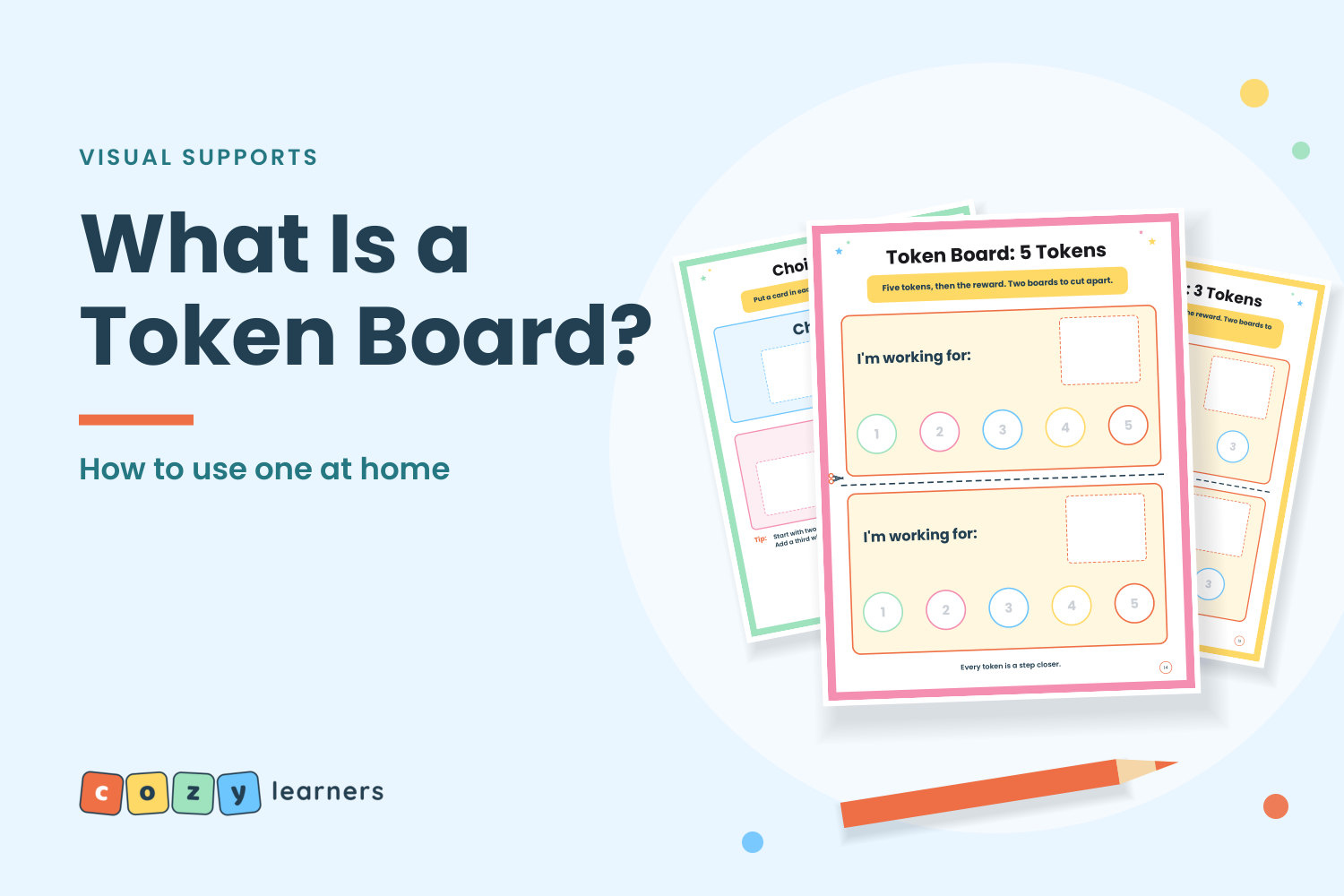
A token board is one of the simplest tools for helping a young child get through a task: a strip with a picture of a reward and a few empty circles. Each time your child does what was asked, they earn a token. When the circles are full, the reward comes.
It is used by parents, preschool teachers and therapists — often with autistic children and children with ADHD, but it works for almost any child who finds waiting hard. Here is how it works, how to start, and the mistakes that make it stop working.
How a token board works
A token board has three parts:
- "I'm working for": a picture of the reward, chosen before you start — a song, the playground, a snack, five minutes of a game.
- The circles: usually 3, 5 or 10 spaces for tokens.
- The tokens: stars, smiley faces or stickers your child puts in the circles, one at a time.
The idea is that a reward which feels far away ("after you finish everything") becomes something your child can see getting closer. Three tokens left, two tokens left, one — and then the playground.
How many tokens to start with
Start with three. It is tempting to begin with ten, but a young child needs to win quickly the first few times to understand how the board works. Three tokens, three small steps, then the reward.
When three is easy, move to five. When five is easy, move to ten. Most toddlers and preschoolers stay at three to five for a long time — and that is fine.
How to use a token board at home
- Choose the reward together. Put its picture in the "I'm working for" box. Let your child pick from two or three options.
- Say what earns a token, in a few words: "One token for each toy in the basket."
- Give the token right away, the moment your child does it — and say what they did: "You put the car away. Token!"
- Count what is left: "Two more, then playground."
- Give the reward as soon as the board is full. Not later, not after dinner — right away.
- Clear the board and start again next time.
Mistakes that make it stop working
- Taking tokens away. A token earned stays earned. Removing tokens turns a motivating tool into a punishment, and most children stop trying.
- A reward that comes too late. If the playground happens "tomorrow," the board means nothing today.
- Too many tokens too soon. Ten tokens for a three-year-old is a very long wait.
- Changing the reward halfway. Agree on it before you start, and keep it.
- Using it for everything. Save it for the one or two tasks that are hard right now.
Token board, First / Then, or a visual schedule?
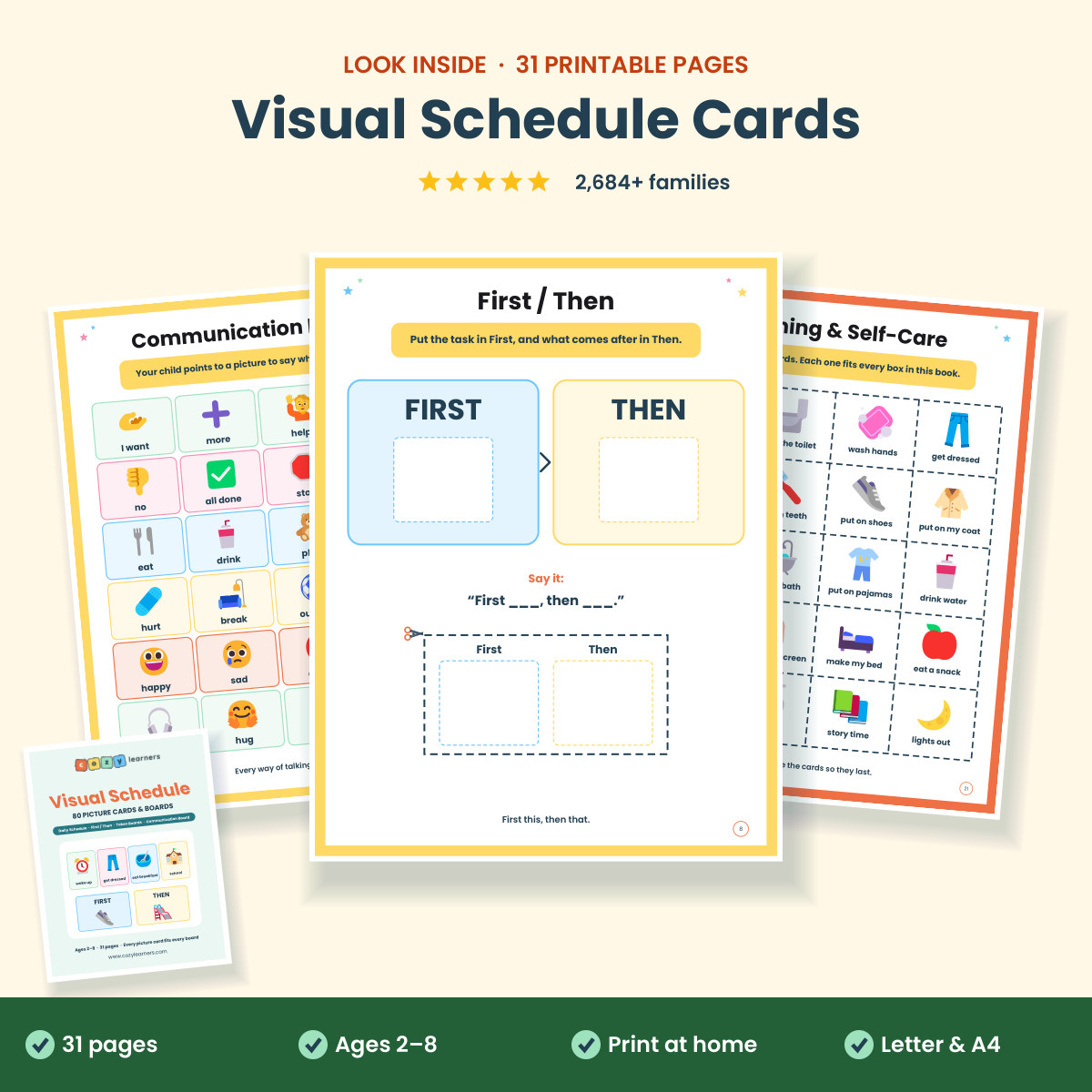
They work well together. A First / Then board is the simplest step: two pictures, the task first and then something your child enjoys. A token board stretches that to a few steps. A visual schedule shows a whole routine in pictures — morning, bedtime, a school day — so your child knows what comes next.
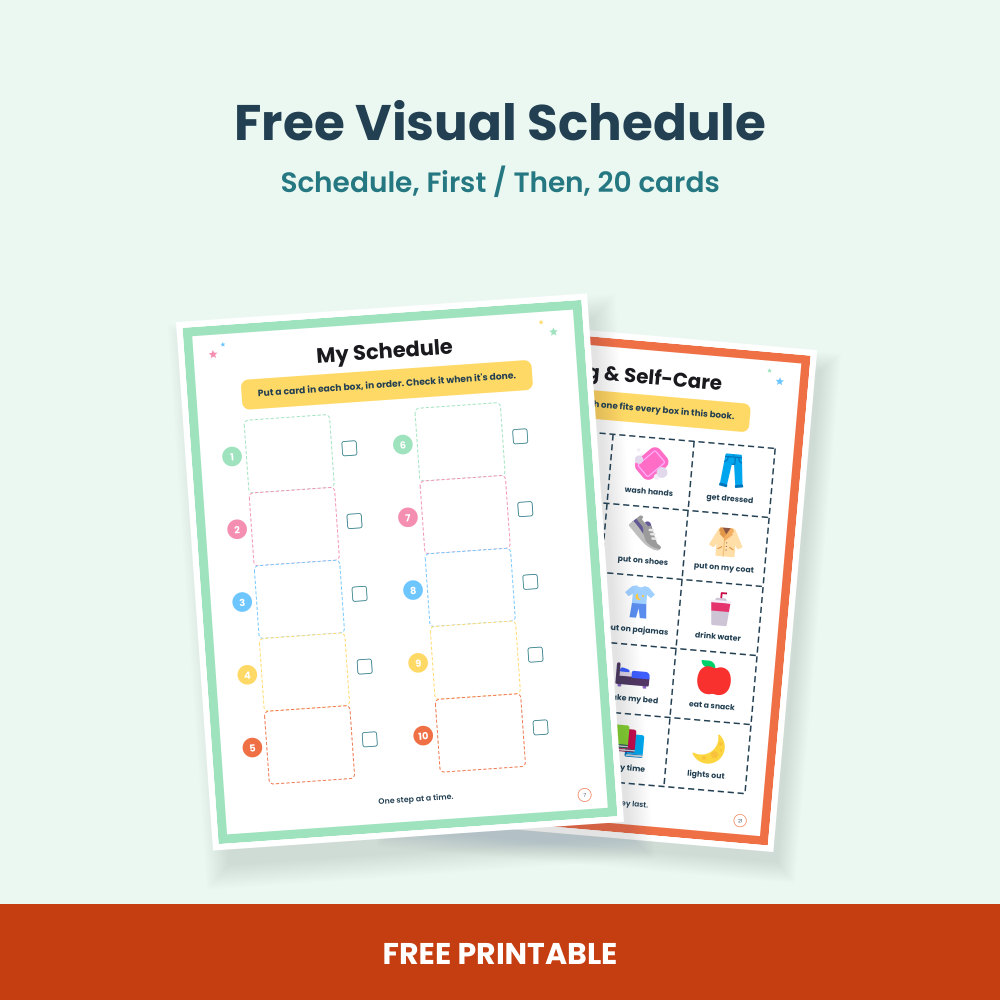
You can make a First / Then board or a visual schedule for free with our visual schedule maker: pick the pictures, put them in order, and print. The free visual schedule pages include a daily schedule, a First / Then board and twenty morning picture cards.
Reward ideas that cost little or nothing
- a favorite song or a dance party
- five minutes of a game together
- a trip to the playground
- blowing bubbles
- an extra bedtime story
- choosing the snack
Time together is often the reward children want most. For bigger goals over a week, a sticker chart works better — see the free behavior chart.
Want token boards ready to print?
Our Visual Schedule Cards include token boards of 3, 5 and 10 tokens with tokens to cut out, plus 80 picture cards, First / Then and Now / Next boards, a choice board, a communication board and break cards — every picture card the same size, so it fits every board.
Free printable
Free Visual Schedule
A free printable visual schedule for kids: a daily schedule with ten boxes, a First / Then board, and 20 morning picture cards that fit every box — from our Visual Schedule Cards, for ages 2 to 8.