12 Phonemic Awareness Activities for Kindergarten (No Prep)
Phonemic awareness is hearing the sounds inside words — and it is the skill that makes phonics click. Twelve quick games to play in the car, at the table or on a walk.
By Cozy Learners · · 5 min read
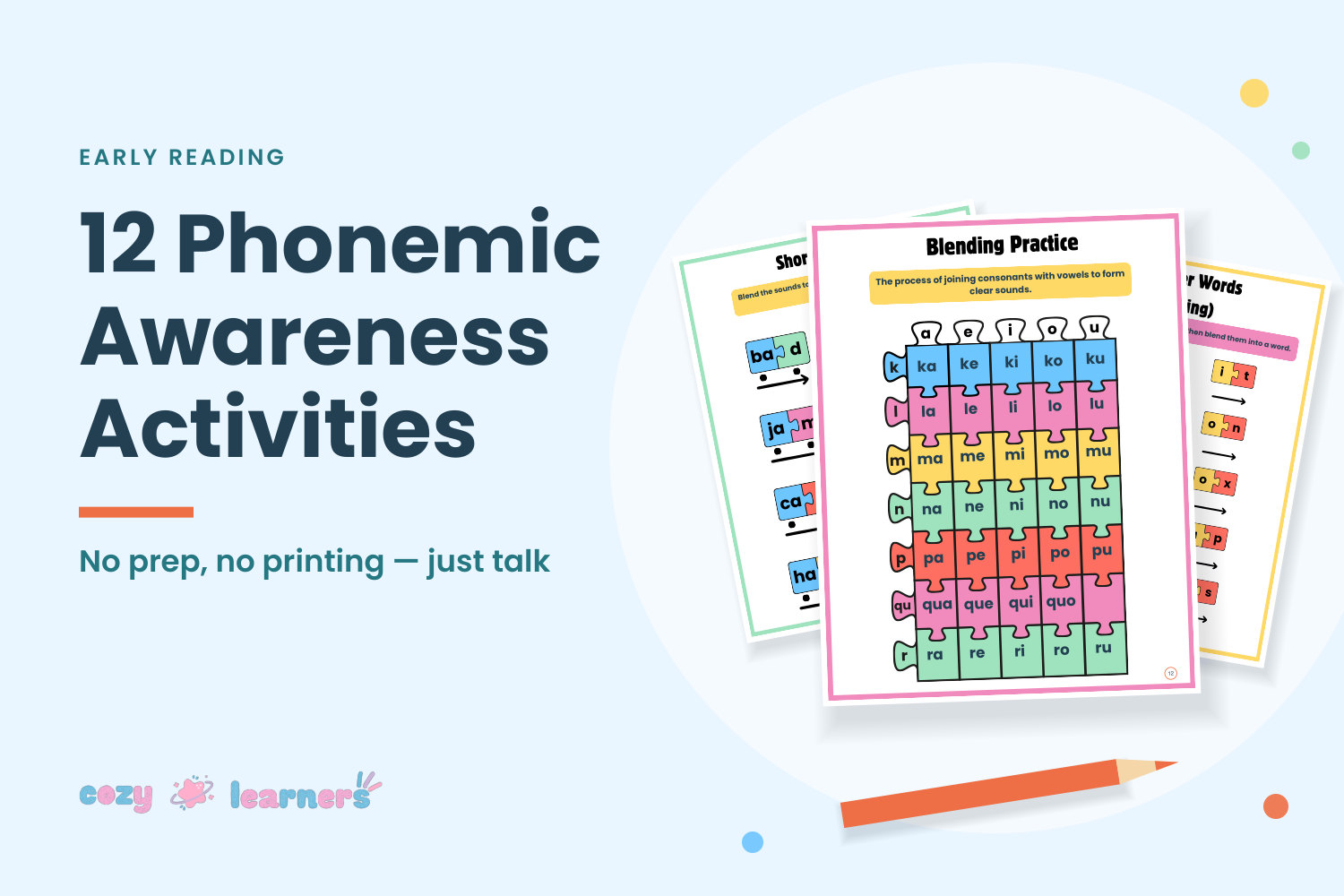
Before a child can read cat, they need to hear that cat is made of three sounds: /k/ /a/ /t/. That listening skill is called phonemic awareness, and it is one of the strongest predictors of how easily a child learns to read.
The best part: it needs no worksheets, no letters, and no table. You can practice it anywhere you can talk.
What phonemic awareness is (and isn't)
Phonemic awareness is the ability to hear and play with the individual sounds — phonemes — in spoken words. It is all done by ear.
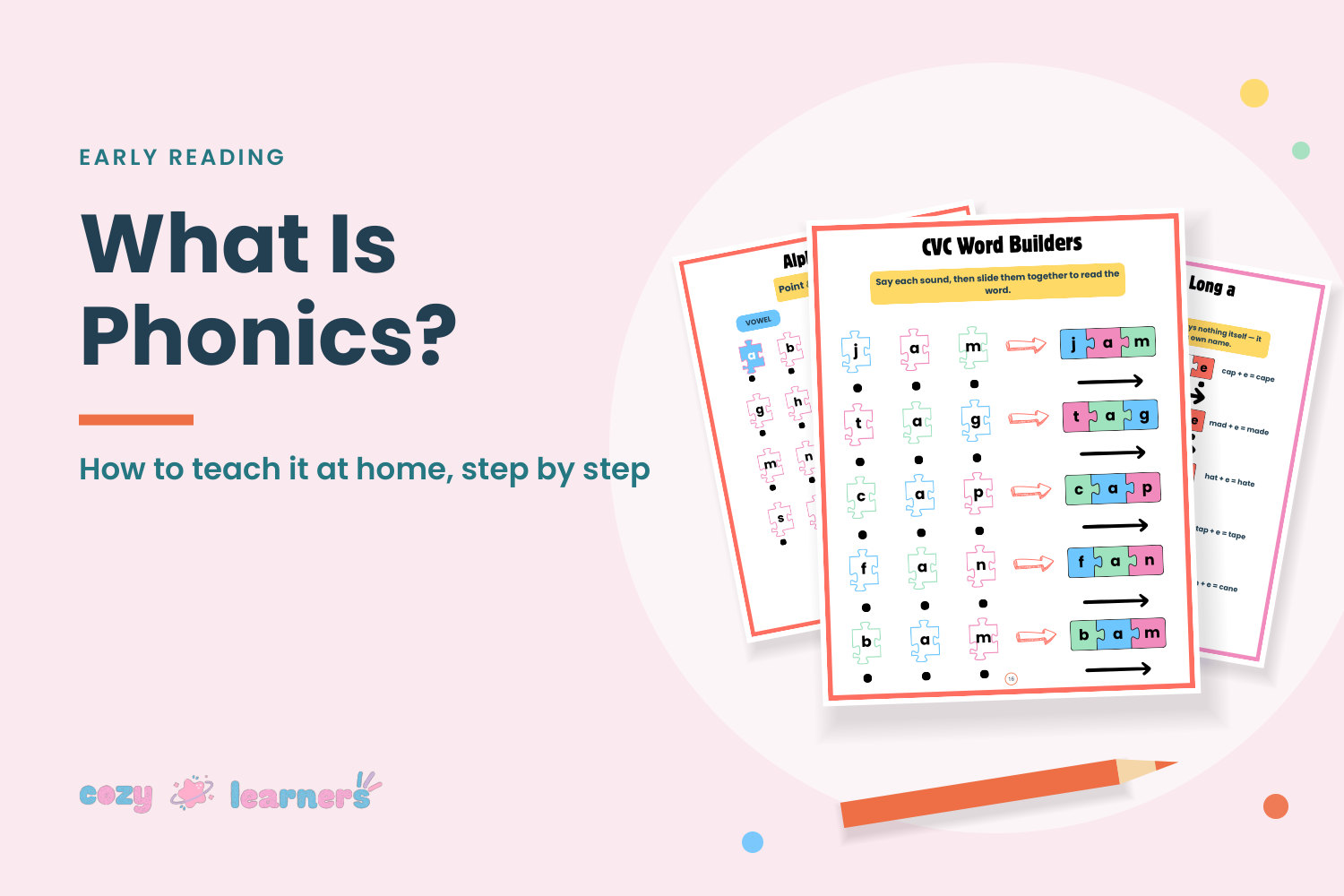
It is different from phonics, which connects those sounds to letters on a page. Phonemic awareness comes first, then grows alongside phonics. A child who can hear that sun starts with /s/ is ready to learn that the letter s makes that sound. (Our guide What Is Phonics? covers the next step.)
The order of skills
Phonemic awareness skills get harder in a fairly predictable order. Start where your child is comfortable and move on when a game gets easy.
- Rhyming — hearing that cat and hat sound alike
- Syllables — clapping the beats in ba-na-na
- First sounds — hearing that mop starts with /m/
- Blending — hearing /s/ /u/ /n/ and saying sun
- Segmenting — hearing sun and saying /s/ /u/ /n/
- Changing sounds — turning cat into hat
Blending and segmenting are the two that matter most for reading and spelling. Rhyming is a warm-up, not a requirement — some children who struggle with rhyme still blend beautifully.
Rhyming games
1. Rhyme or not?
Say two words. Your child gives a thumbs up if they rhyme, thumbs down if not. Cat, hat? Up. Cat, dog? Down. Easy, quick, and a good place to start.
2. Finish my rhyme
Start a silly line and let your child fill the gap: "I saw a goat… in a ___." Any rhyme counts, real word or not. Boat, coat, zoat.
3. Rhyme hunt
Pick a word — bed — and take turns naming rhymes until someone gets stuck. Red, fed, Ted, sled.
Syllable games
4. Clap the name
Clap the beats in each family member's name. Em-ma (two claps). Ben (one). Ol-i-ver (three). Then try pets, foods, and toys.
5. Robot talk, slow version
Say a long word in syllables like a robot — di-no-saur — and have your child say the whole word. This is blending, at the easier syllable level.
First-sound games
6. I spy a sound
"I spy something that starts with /b/." Say the sound, not the letter name. Ball, book, banana. This is the classic, and it works on every car trip.
7. Sound sorting
Collect a few toys or kitchen objects. Pick two sounds, like /m/ and /s/, and sort them into two piles: mug, map in one; sock, spoon in the other.
8. Silly name swap
Change the first sound of everyone's name to the same sound. With /b/: Mommy becomes Bommy, Sam becomes Bam. Children find this hilarious, and it trains them to isolate the first sound.
Blending and segmenting games
9. Robot talk, sound by sound
The most important game on this list. Say a short word one sound at a time, like a robot — /p/ /i/ /g/ — and your child says the word: pig! Start with two-sound words (up, at), then three.
Keep the sounds short and clean: /p/, not "puh."
10. Stretch it out
Now reverse it. You say a word; your child stretches it like gum, saying each sound. Fan → /f/ /a/ /n/. Holding up a finger for each sound helps.
11. Sound boxes
Draw three boxes on a paper, or line up three coins. Say a word; your child pushes a coin into a box for each sound they hear. Map: one, two, three. It makes an invisible skill visible, and it is the bridge to spelling.
Changing sounds
12. Change one sound
Once blending and segmenting are easy, play with swaps. "Say cat. Now change /k/ to /h/." Hat! "Now change /t/ to /m/." Ham! This is advanced for kindergarten — save it for when the other games feel easy.
How often, and how long?
A few minutes a day is enough. Two or three games at breakfast, in the car, or at bath time will do more than one long session a week. If your child is getting most answers right, move to the next skill. If they are guessing, drop back a step.
When to add letters
You do not need to wait until phonemic awareness is perfect. Once your child can hear first sounds and blend simple words by ear, start connecting those sounds to letters. The two skills strengthen each other.
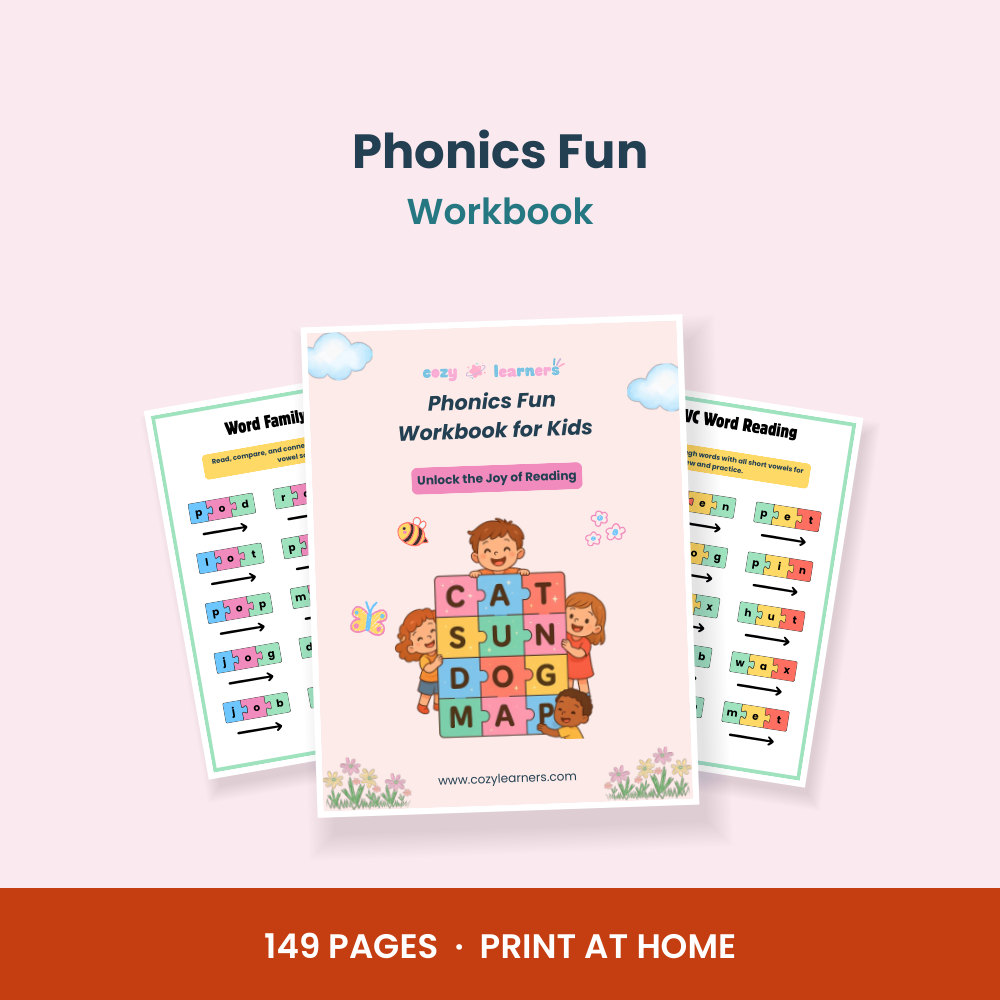
Our Phonics Fun Workbook picks up right where these games leave off: letter sounds first, then blending grids where sounds snap together into words, then short-vowel words with all five vowels. It is 149 pages, in the order reading is learned.
For a quick next step, print the free 48 Sight Word Flash Cards. They come with three games that work the same way as the ones above — short, playful, and over before anyone gets tired.