15 Letter Recognition Activities for Preschool and Kindergarten
Fifteen simple ways to help your child learn the alphabet — names, shapes and sounds — using things you already have at home, plus the order that makes it easier.
By Cozy Learners · · 5 min read
Knowing the letters is the first big step toward reading. A child who can look at m and say its name and its sound has a tool they will use every day for the rest of their life.
Letter recognition doesn't need flashcard drills. Children learn letters best by seeing them often, touching them, and using them for something that matters to them — like their own name.
Three things to learn about each letter
"Knowing a letter" actually means three different skills:
- Its shape — telling b from d, and matching B to b
- Its name — "bee"
- Its sound — /b/, as in ball
For reading, the sound matters most. Many parents start with letter names because of the alphabet song, which is fine, but bring sounds in early. A child who knows that s says /s/ and a says /a/ can begin blending words, even if they still mix up a few letter names.
Which letters to teach first
There is no need to go A to Z. Some starting points work better:
- The letters in your child's name. They are the most meaningful letters your child will ever see.
- Letters that are easy to say and hear. m, s, f, a can be stretched out (mmmm), which makes them easier to hear in words.
- Letters that build words quickly. With s, a, t, p, i, n, a child can read sat, pin, tap, nap, sip within weeks.
Leave the most confusing pairs — b and d, p and q — a little apart, so your child isn't learning both at the same time.
Lowercase letters deserve more time than capitals. Almost everything a child will read is lowercase.
Activities with your child's name
1. Name puzzle
Write your child's name on a strip of paper, then cut it into letters. Mix them up and rebuild the name together. When it's easy, try a sibling's name.
2. Name hunt
Look for the letters of their name on cereal boxes, street signs, and book covers. "There's an E, like in Emma!"
3. Rainbow name
Write their name large, and let them trace over each letter with three or four different colored crayons.
Hands-on activities
4. Playdough letters
Roll playdough into snakes and shape them into letters. Great for fine motor skills, too.
5. Letters in a tray
Pour salt, flour or sugar into a baking tray. Show a letter, and your child writes it with a finger. Shake to erase.
6. Body letters
Make letters with your bodies: arms up for Y, a big circle for O, lying down together for T.
7. Sticky note slap
Write letters on sticky notes and put them on a wall or door. Call a letter (or a sound) and your child slaps it.
Games and hunts
8. Letter of the day
Pick one letter each day. Look for it everywhere, say its sound, and find three things in the house that start with it.
9. Alphabet hide and seek
Hide magnetic or paper letters around a room. Each time your child finds one, they tell you its name or sound.
10. Go fish, alphabet version
Make pairs of cards with capital and lowercase letters. Play Go Fish or Memory, matching A with a.
11. Letter bingo
Draw a simple 3×3 grid with letters. Call letters or sounds; your child covers them with a button or cereal piece. Three in a row wins.
Sound activities
12. What's in the bag?
Put a few small objects in a bag: a ball, a spoon, a toy car. Your child pulls one out and tells you its first sound. Then find the letter that makes it.
13. Sound sort
Pick two letters, like m and s. Sort pictures or toys by the sound they start with.
14. Sing the sounds
Sing the alphabet song with letter sounds instead of names: /a/, /b/, /k/… It sounds funny and children love it.
Printables
15. Trace, color, and find
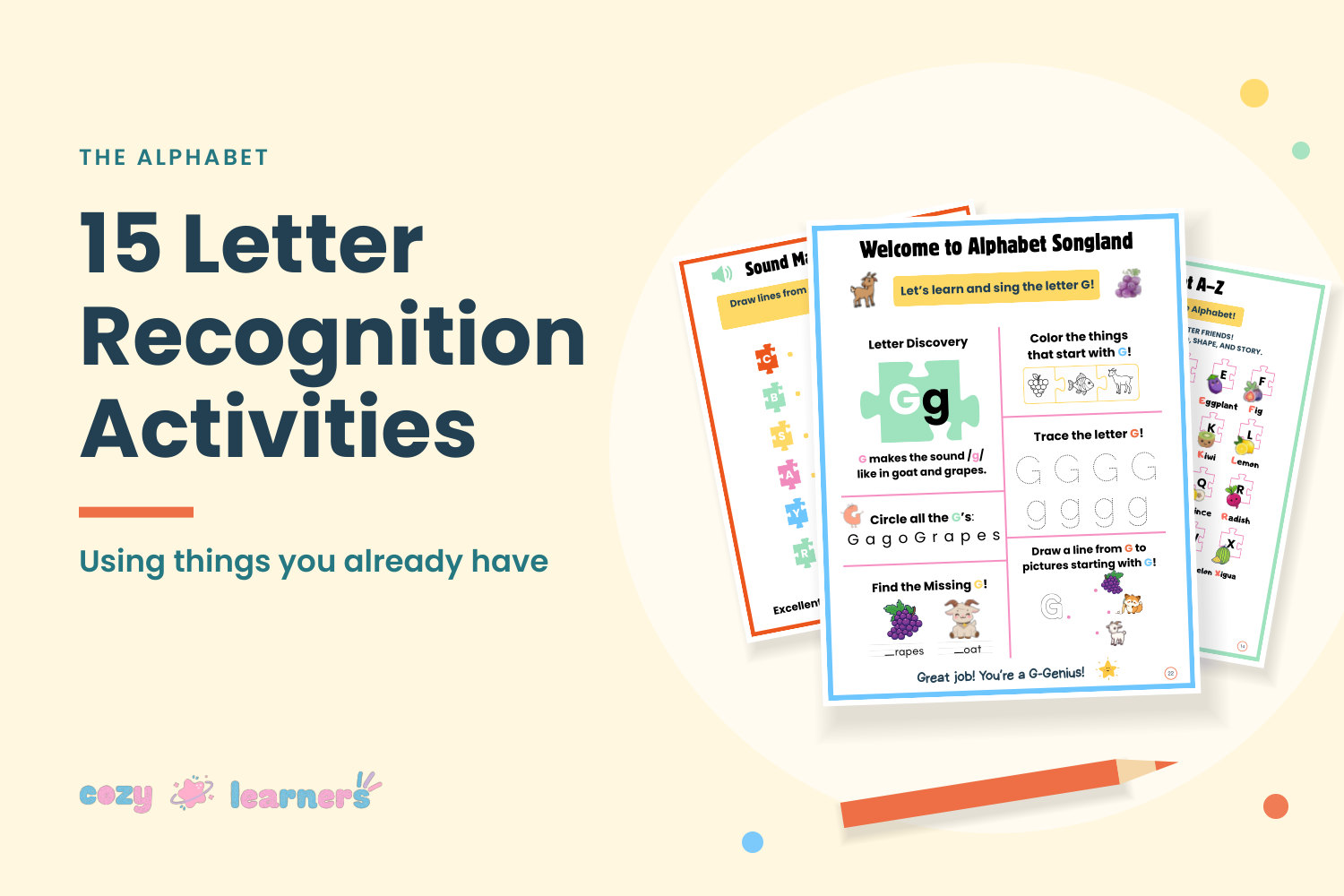
A short printable page — trace the letter, color the pictures that start with its sound, circle the letter among others — reinforces everything above in ten minutes. Many families use one such page a day as a calm, predictable part of the routine.
How long does it take?
Many children learn most letters and sounds over a year or so, often between ages 4 and 5, but the range is wide. Some know them all at three; some are still working on a few in kindergarten. Both are normal.
Watch for steady progress, not speed. If a letter keeps slipping, give it a few days of extra attention with a game your child enjoys. If, by the middle of kindergarten, your child still knows very few letters despite regular practice, it is worth mentioning to your pediatrician — not because something is necessarily wrong, but because early support helps.
Putting it into a routine
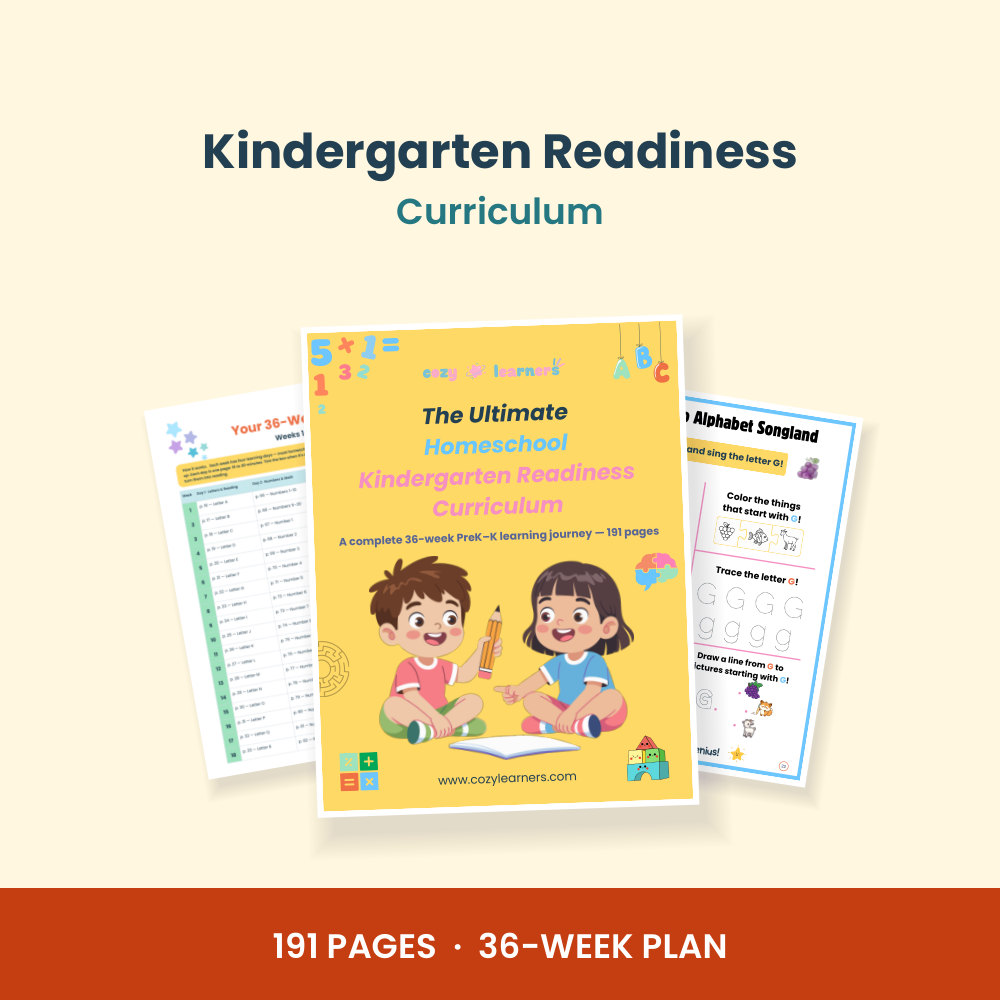
The activities above are most powerful when they happen a little every day. Our Kindergarten Readiness Curriculum starts with a full Alphabet & Phonics section — a page for every letter, with a song, words that start with it, and a hunt to circle it, then alphabet puzzles and a sound-match page — inside a 36-week plan that tells you which page to open each day.
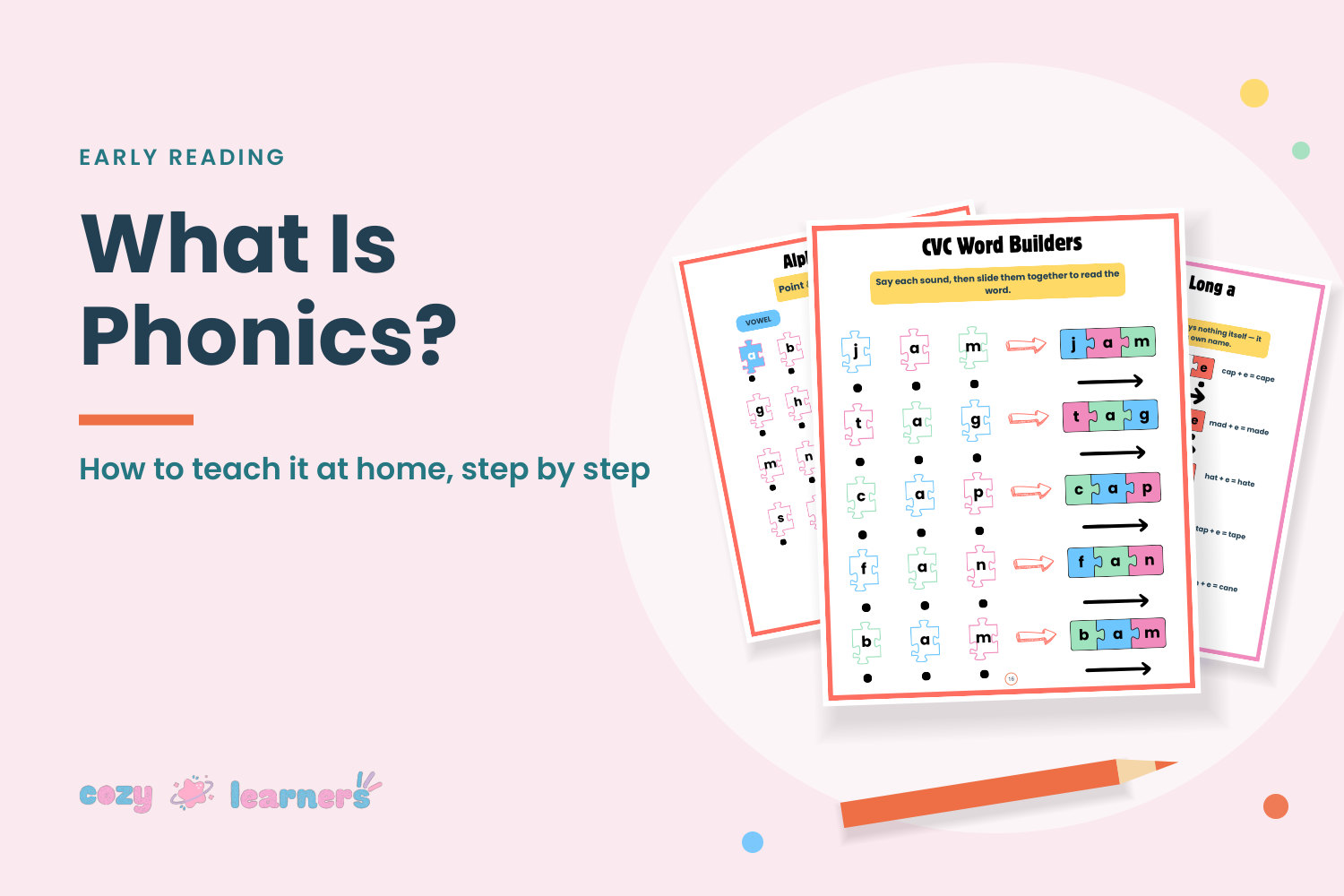
Not sure where your child stands? Our free Kindergarten Readiness Checklist includes the letter skills most kindergarten teachers look for, alongside numbers, fine motor, and independence. Once your child knows their letter sounds, our guide What Is Phonics? explains what comes next.