How to Choose a Kindergarten Homeschool Curriculum
Boxed, online, free or printable? Seven questions that tell you which kindergarten homeschool curriculum fits your family — and which ones to walk away from.
By Cozy Learners · · 6 min read
Search for "best kindergarten homeschool curriculum" and you will find dozens of lists, each with a different winner. That is because there is no single best one. There is the one that fits your child, your budget, and the amount of time you actually have on a Tuesday morning.
Instead of another ranking, here are the seven questions that sort the options quickly. Answer them honestly and the choice usually makes itself.
The four kinds of curriculum
Almost everything on the market falls into one of four groups.
- Boxed curriculum. A full year in a box: readers, workbooks, teacher's manuals. Good for parents who want every lesson scripted. Watch out for the price, and for much more material than a five-year-old needs.
- Online program. Lessons on a screen, often by subscription. Good for independent practice and busy days. Watch out for screen time, and the bill that keeps coming.
- Free resources. Worksheets, library books, free websites. Good for tight budgets and for supplementing. Watch out for the missing sequence: you have to build the plan yourself.
- Printable curriculum. A digital book you print at home. Good for families who want structure without the box. Watch out: you need a printer, and you have to press print.
None of these is wrong. Many families mix them: a printable spine, library books, and the occasional app.
1. Does it come with a plan?
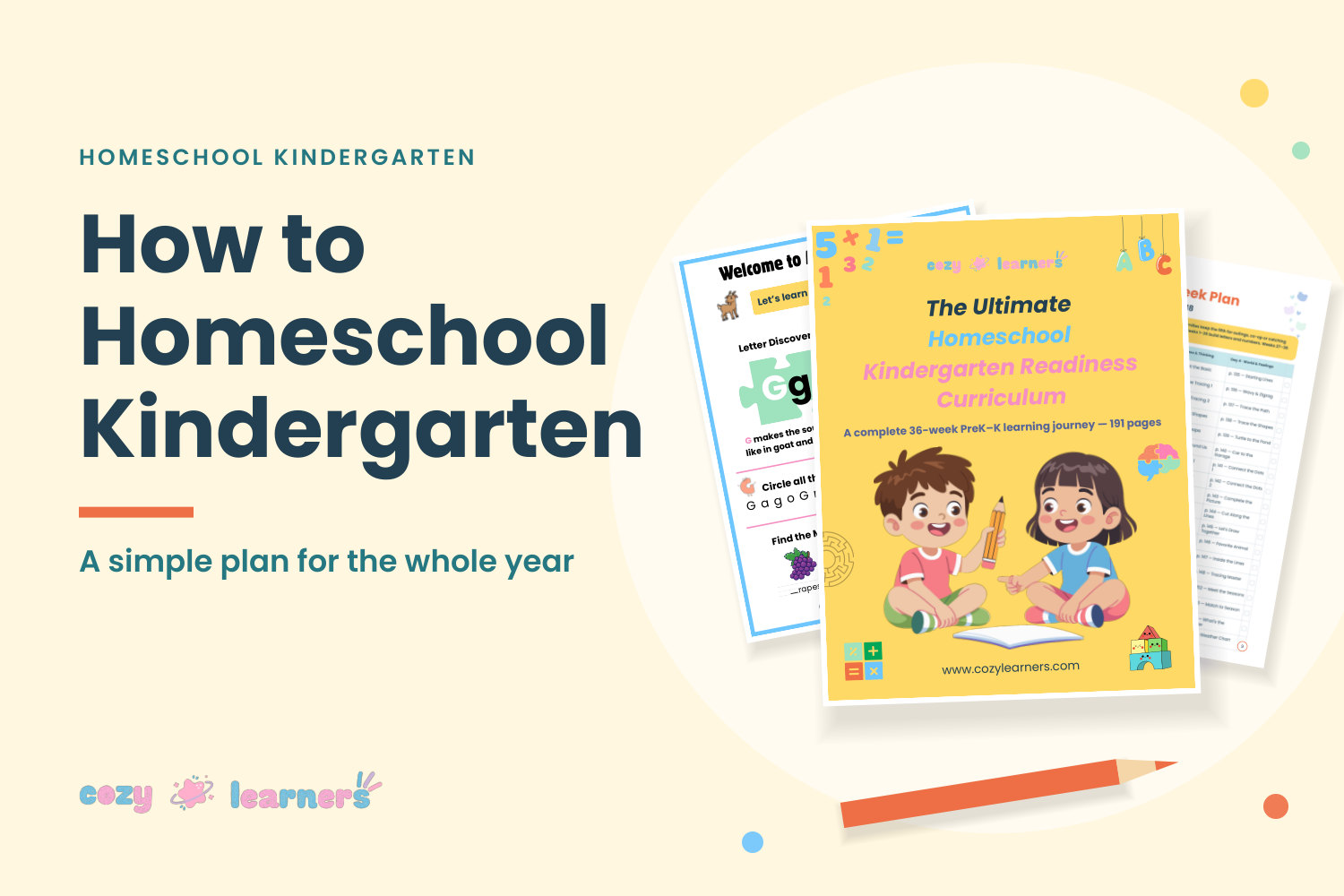
This is the question most reviews skip, and it matters most. A stack of good worksheets is not a curriculum. A curriculum answers what do we do today? without you having to work it out.
Look for a schedule: a week-by-week or day-by-day plan that tells you which page or lesson comes next. If a program gives you 300 pages and no order, you are buying material, not a curriculum. That can still be useful, but you will be doing the planning yourself.
2. Does it teach reading in order?
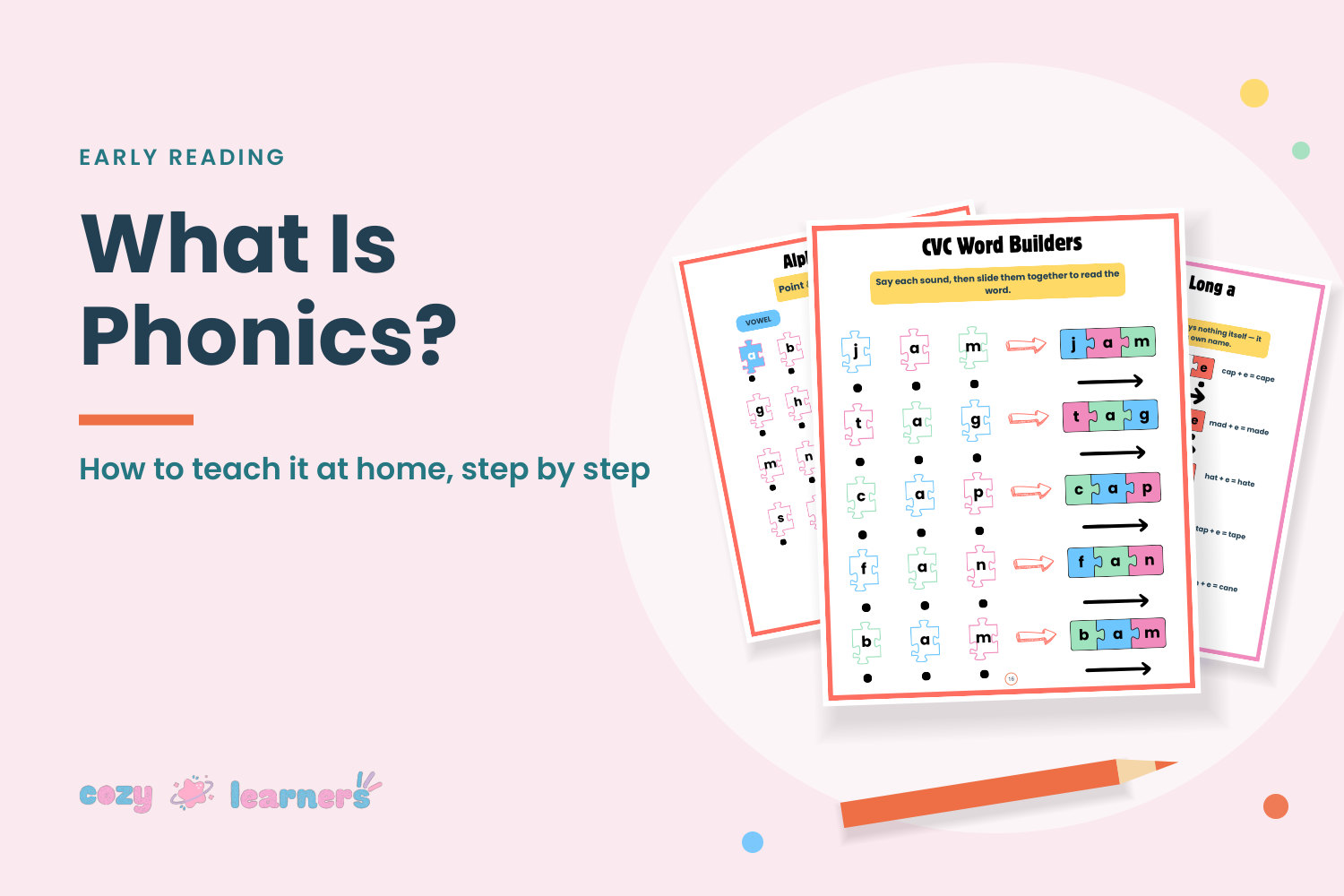
Reading is the heart of kindergarten. The research on how children learn to read is unusually clear: systematic phonics — letter sounds taught in a planned order, then blended into words — works better than guessing from pictures or memorizing whole words.
A good kindergarten reading program moves roughly like this:
- Letter sounds
- Blending sounds into short words (c-a-t, cat)
- Short-vowel word families (cat, hat, mat)
- Blends and digraphs (st, sh, th)
- A small set of sight words
- Short sentences, then a first story
If a program jumps around, or leans mostly on memorizing words by sight, be cautious. Our guide What Is Phonics? explains why the order matters.
3. Is the math hands-on?
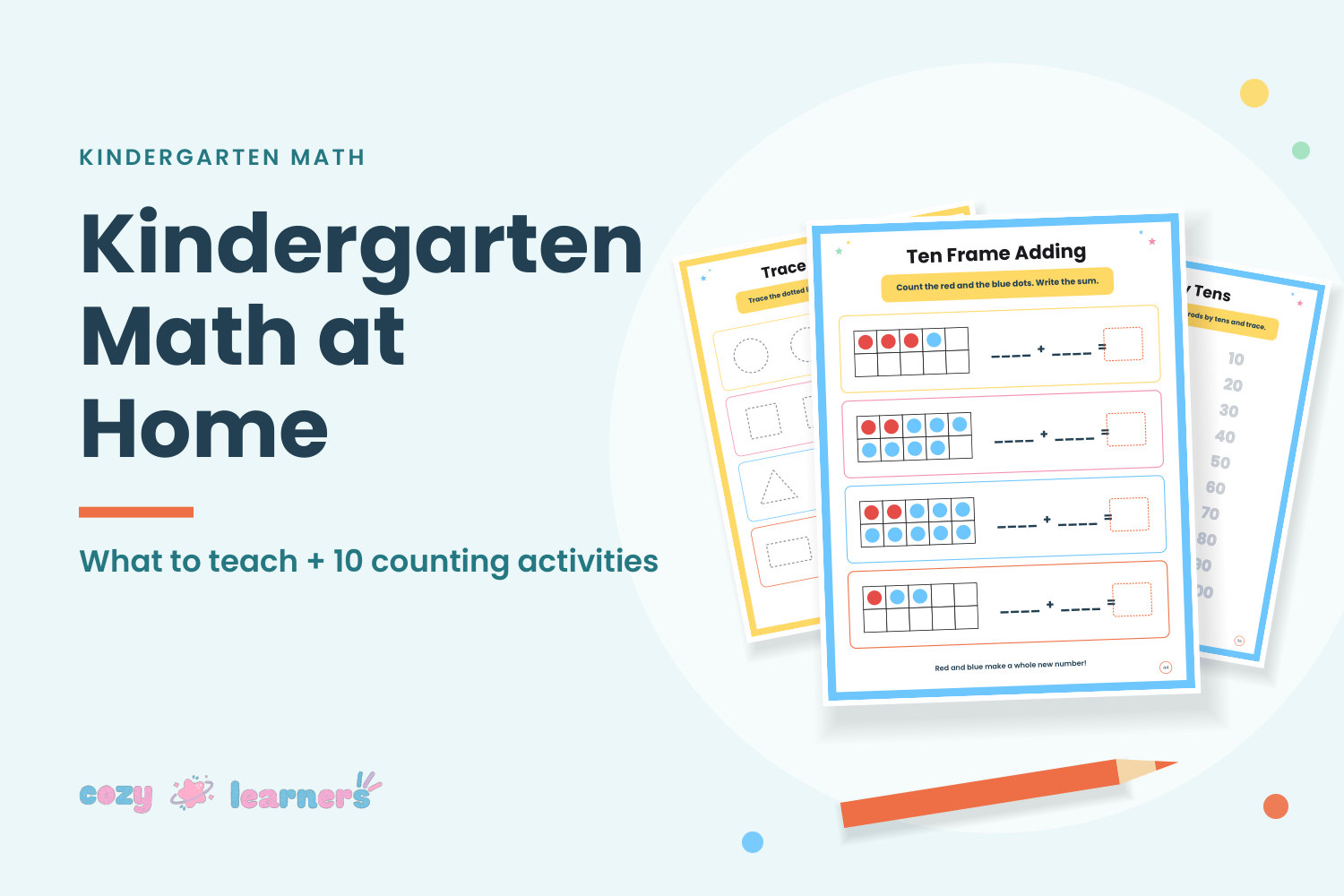
Kindergarten math is about understanding quantity, not filling in columns. Look for a program that uses pictures, ten frames, number lines and real objects, and that covers the core of kindergarten math: counting to 100, numbers to 20, adding and taking away within 10, shapes, and simple measuring.
A good sign: it teaches teen numbers as ten and some more. That single idea makes place value easy later.
4. How much of your time does it need?
Be realistic about your week. A program that expects an hour of preparation each evening will not survive October.
Ask:
- How long is a typical lesson? For kindergarten, 10 to 20 minutes per subject is plenty.
- Does it need prep — cutting, laminating, gathering supplies?
- Can you open it and start, or do you need to read a manual first?
5. Does it fit your child's age, not just the grade?
"Kindergarten" covers a wide range. A child who just turned five and a child about to turn seven are in very different places. Look for a stated age range, and look at sample pages. Can your child do the first few with a little help? Is the print large and the page uncluttered?
If your child is on the young side, a program that starts at the very beginning — tracing, letter sounds, counting to five — will serve you better than one that assumes they already read.
6. What does it really cost?
Compare the full price for the year, not the price of the first piece.
- Boxed curricula often run into the hundreds of dollars once you add every subject.
- Subscriptions look cheap per month and add up over a year — and you lose access when you stop paying.
- Printables are a one-time cost, and you can print a page again when a worksheet gets torn, or use the same book for a younger sibling.
Also check what is not included. Some programs need extra readers, manipulatives or a second workbook to work as advertised.
7. Can you see it before you buy?
A trustworthy curriculum shows you real pages. Look for full sample pages, not just glossy cover photos, and ideally a free sample you can try with your child for a week. Reviews from real families help too — read the middling ones, not just the five-star ones. They tell you who the program does not suit.
A short checklist
Before you buy, you should be able to say yes to most of these:
- It comes with a day-by-day or week-by-week plan.
- Reading is taught with systematic phonics, in order.
- Math uses pictures and objects, and covers numbers to 20 and adding within 10.
- A lesson takes 20 minutes or less, with little or no prep.
- The age range matches my child.
- I know the full price for the year.
- I have seen real sample pages.
Where Cozy Learners fits
We make printable books, so we are not neutral, and you should weigh what follows with that in mind.
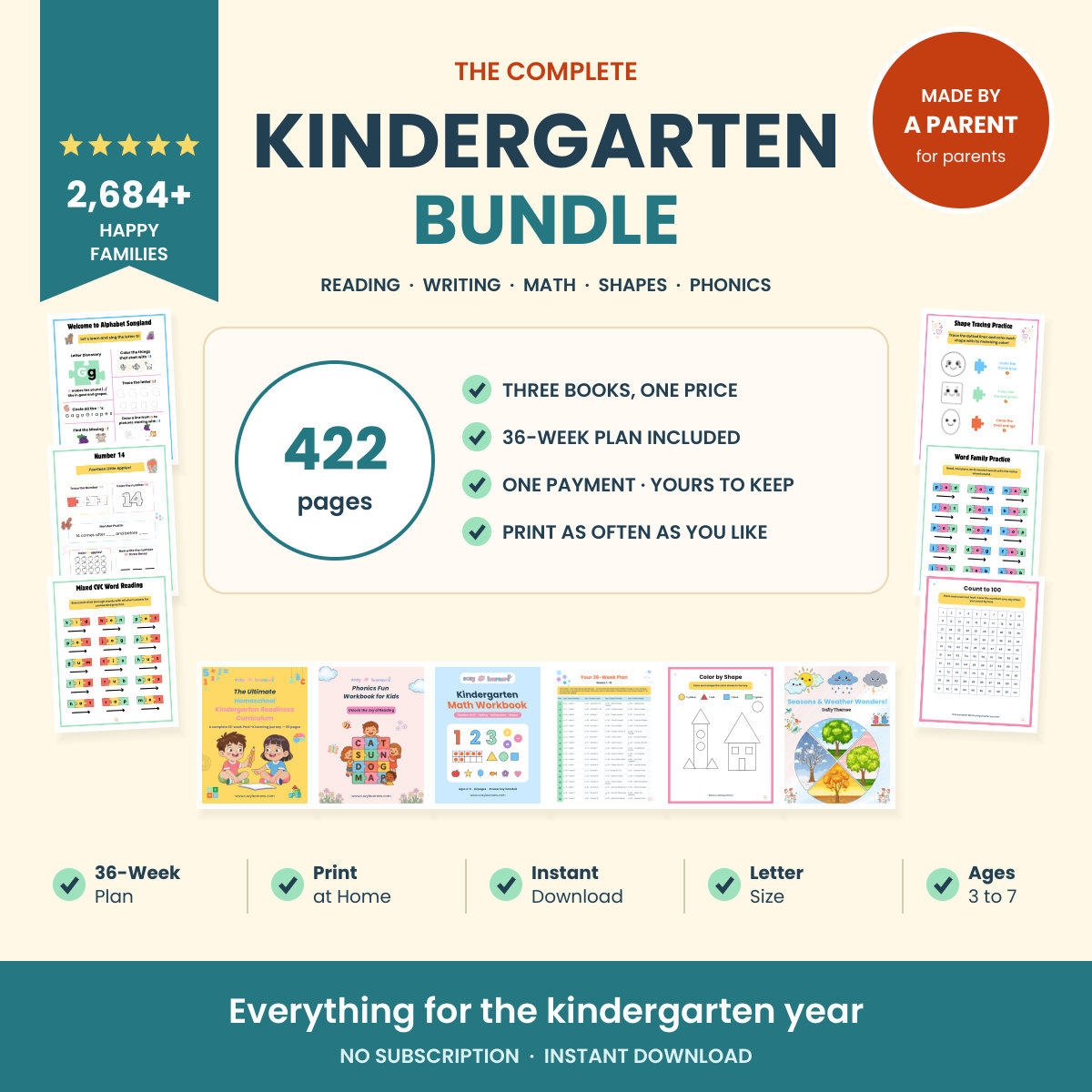
Our Complete Kindergarten Bundle was built to answer the seven questions above: a 36-week plan with a real page number for every school day, a phonics workbook that goes from letter sounds to a first story in order, and a math workbook that follows the kindergarten math most US schools teach. It is 422 pages, Letter size, one payment, and you can print it as many times as you need.
Before you decide, try the free Week 1 sample with your child. One real week tells you more than any list — including this one.