How to Start Homeschool Kindergarten in January
Starting kindergarten at home in the middle of the year is completely fine. Two simple ways to fit a full 36-week plan around a January start — one relaxed, one that finishes by summer.
By Cozy Learners · · 6 min read
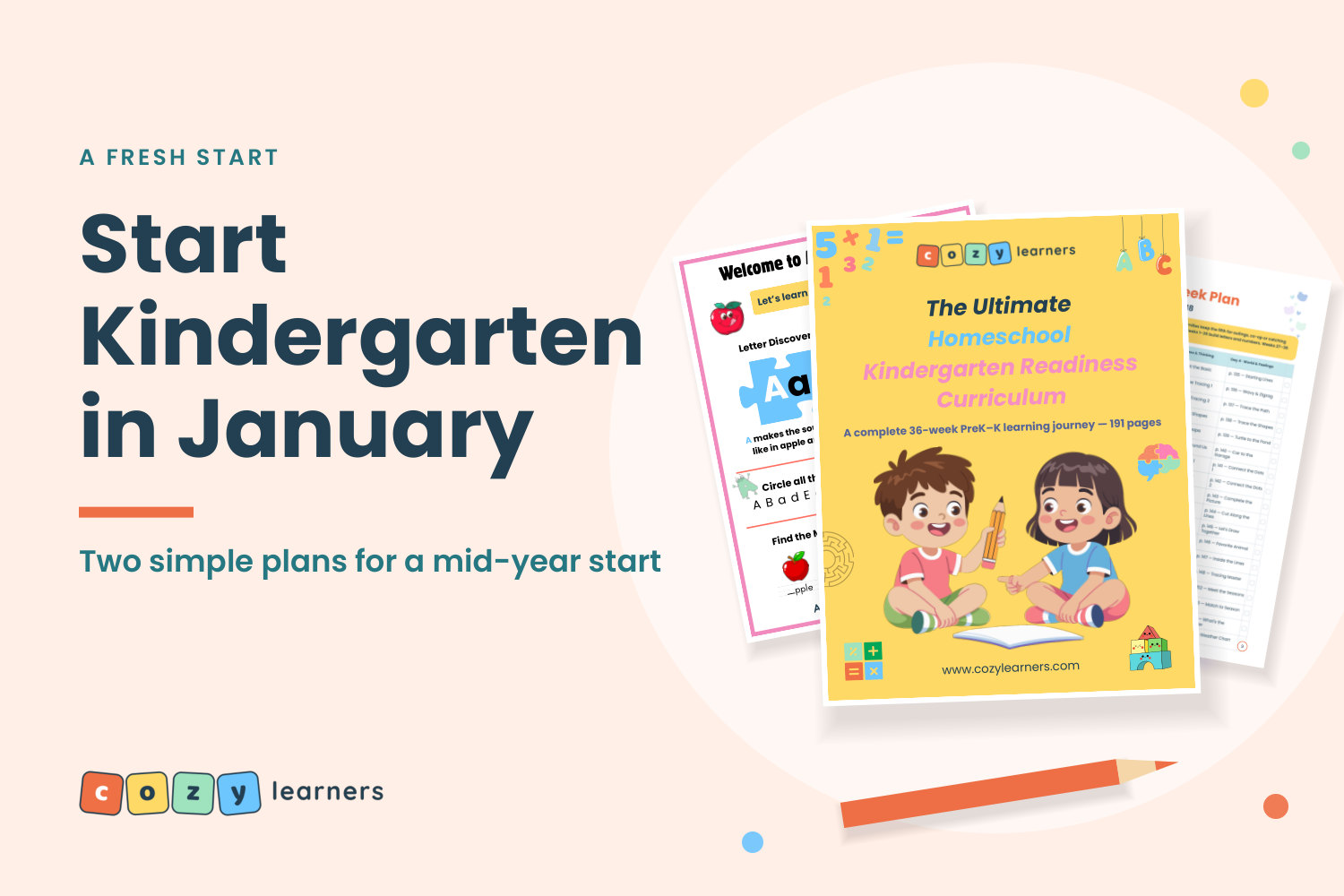
A lot of families start kindergarten at home in January. Some decided over the holidays that school is not working. Some have a child who was not quite ready in September and is now asking for "real school." And some simply like a fresh start with the new year.
Whatever brought you here: starting in the middle of the year is completely fine. Kindergarten is not a race, and a five-year-old does not know or care what the school calendar says. What they need is a short, steady routine — and a plan that tells you what to do each day.
This guide shows two simple ways to fit a full year of kindergarten around a January start.
Is it too late to start kindergarten in January?
No. Homeschool kindergarten does not have to follow the September-to-June school year. Many homeschool families already school all year round, with breaks when they need them. A January start just means your year runs differently.
Two things are worth doing first:
- Check your state's rules. Homeschool law is set state by state. In many states kindergarten is not compulsory, and in others you may need to file a notice or keep simple records. If your child is leaving a school mid-year, your state may also ask you to withdraw them in writing. The Home School Legal Defense Association has a plain-language summary for every state at hslda.org.
- See where your child is today. Our free kindergarten readiness checklist lists thirty skills in six areas. It is a guide, not a test — it simply tells you which plan below suits your child better.
The plan we use: 36 weeks, four pages a week
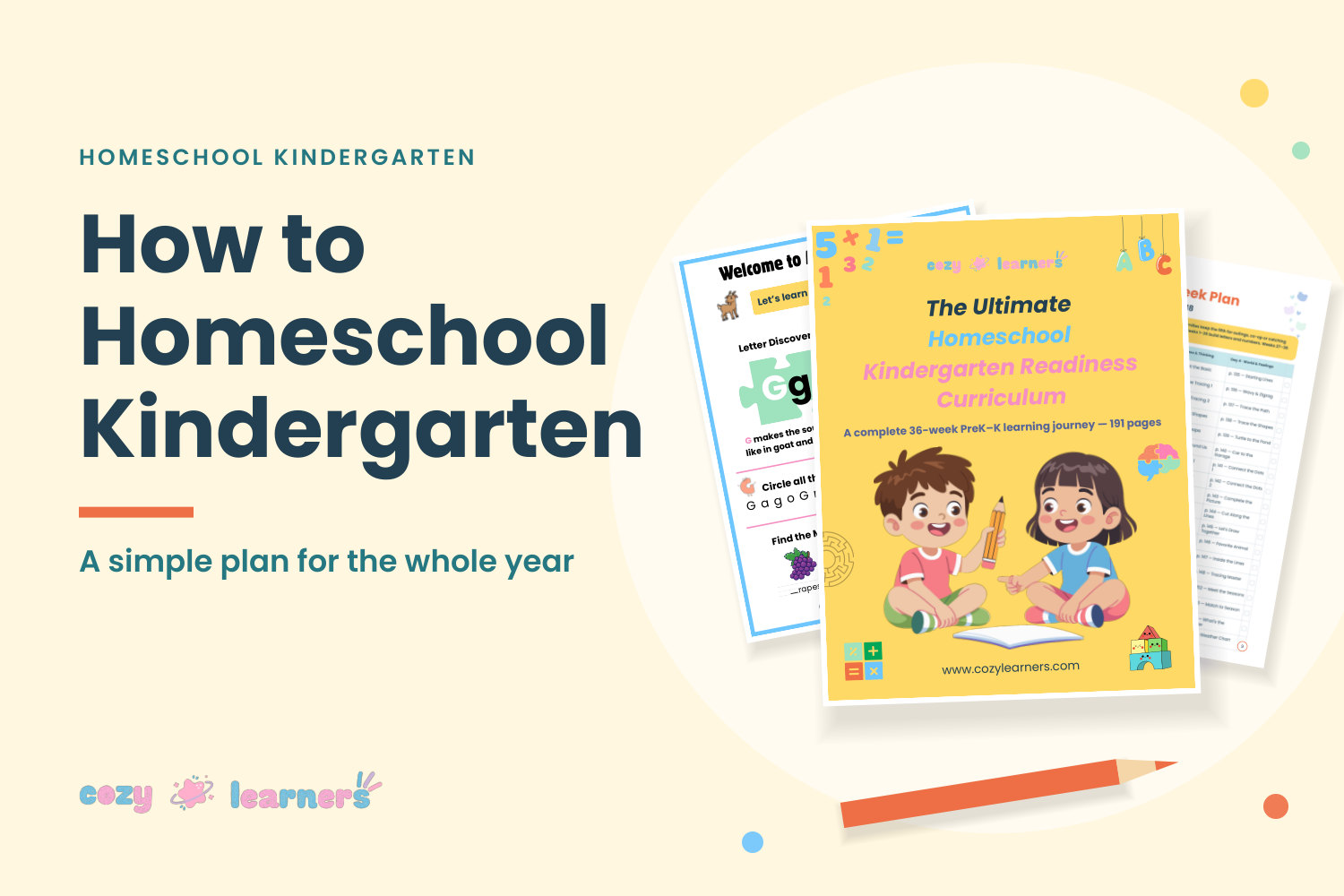
Our Kindergarten Readiness Curriculum is built around a 36-week plan. Each week has four pages, one for each area:
| Area | Week 1 | Week 2 |
|---|---|---|
| Letters & reading | Letter A | Letter B |
| Numbers & math | Numbers 1–10 | Numbers 11–20 |
| Shapes & thinking | Meet the basic shapes | Shape tracing |
| World & feelings | Starting lines | Wavy and zigzag lines |
There are no dates in the plan, only week numbers. That is what makes a January start easy: week 1 begins on whichever Monday you choose.
Plan A: the relaxed start (finish in the fall)
Best for: a younger five-year-old, a child who has just left school and needs to settle, or a family that wants a calm pace.
- Start week 1 on the first Monday of January.
- Do one page a day, four days a week — about 15 to 20 minutes.
- Keep the fifth day for reading aloud, a library trip, or simply a break.
- Take the weeks off you need: a sick week, a family visit, a summer break.
Thirty-six weeks of school, with a summer break in the middle, carries you into the fall. That is not "behind." Your child gets a full kindergarten year at a gentle pace, and first grade starts whenever they finish.
Plan B: the catch-up (finish by summer)
Best for: a child who is already five or six, ready for a little more, and enjoys their "school time."
- Start week 1 on the first Monday of January.
- Do two weeks of the plan in each calendar week: eight pages, spread over five days — one or two pages a day, about 25 to 30 minutes.
- At that pace the 36 weeks take 18, and you finish in May, in time for a free summer.
Watch your child, not the calendar. If two pages a day turns into tears, drop back to Plan A for a while. Switching between the two is fine — the week numbers keep your place either way.
A simple January week
Here is what week 1 looks like at a relaxed pace:
| Day | Page | Time |
|---|---|---|
| Monday | Letter A | 15 minutes |
| Tuesday | Numbers 1–10 | 15 minutes |
| Wednesday | Meet the basic shapes | 15 minutes |
| Thursday | Starting lines | 15 minutes |
| Friday | Read aloud, play, go outside | as long as you like |
You can print this exact week and try it before you buy anything: our free week 1 sample has all four days, just as they appear in the book.
Add reading and math when you are ready
The curriculum covers all four areas on its own. If you want more practice in the two that matter most for first grade, the Phonics Fun Workbook goes step by step from letter sounds to a first story, and the Kindergarten Math Workbook follows its own 36-week plan. Many families add one page of each on top of the daily page, once the routine feels easy — often a few weeks in, not on day one.
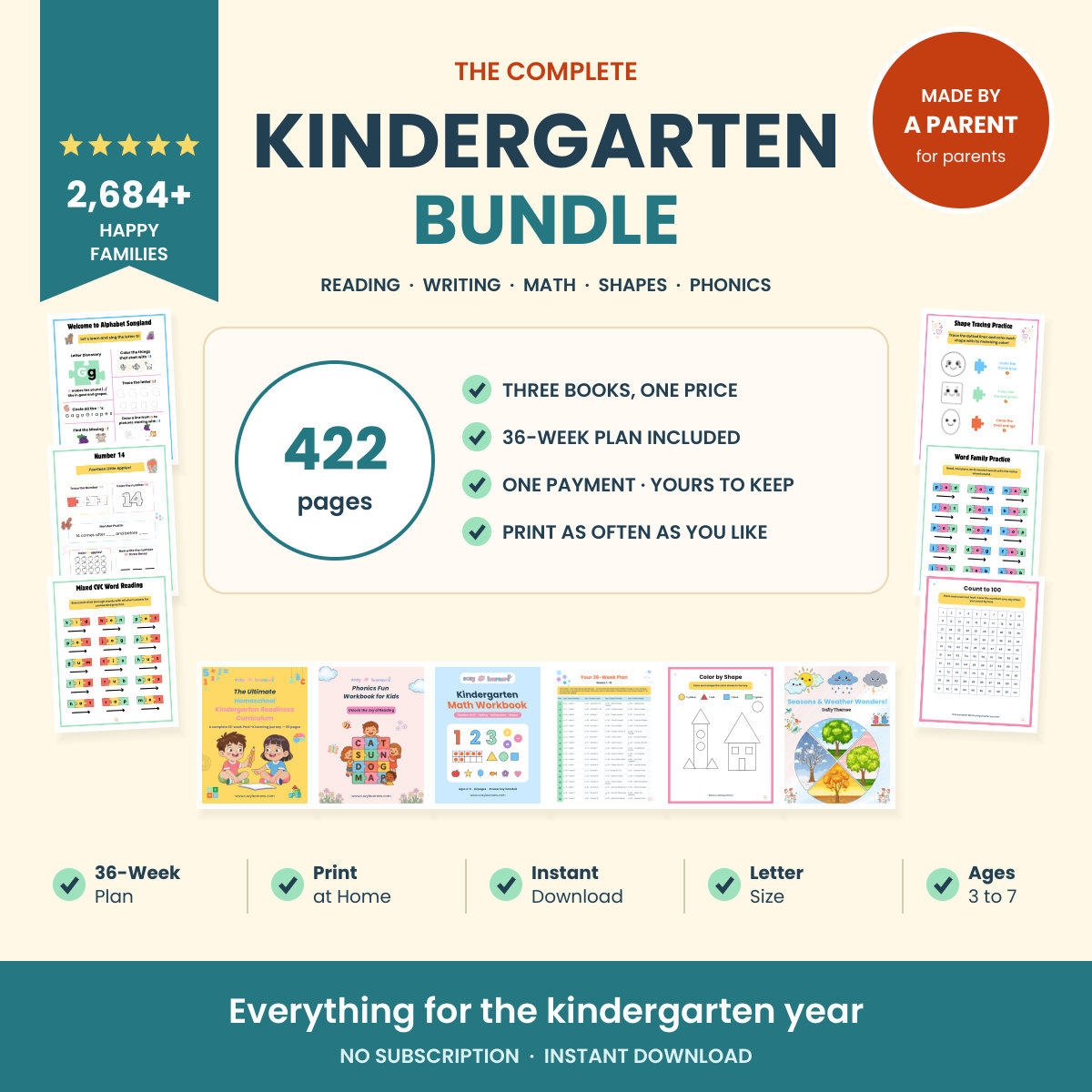
All three come together in the Complete Kindergarten Bundle, for less than the books cost separately.
A few tips for a mid-year start
- Start small. The first week is about the routine, not the pages. Ten happy minutes beat thirty tearful ones.
- Same time, same place. Right after breakfast at the kitchen table works for many families. A routine makes "school" feel normal quickly.
- Give a child coming from school a few quiet days. A week of reading, walks and play before you start is not lost time.
- Keep the finished pages. A folder of completed work is a lovely thing to look back on — and it is often all the record-keeping you need.
Your first step
Print week 1 for free, pick a Monday, and sit down together for fifteen minutes. If it goes well, you have your plan for the year. For the full picture of what kindergarten at home looks like, read our guide on how to homeschool kindergarten.
Happy new year — and happy learning.
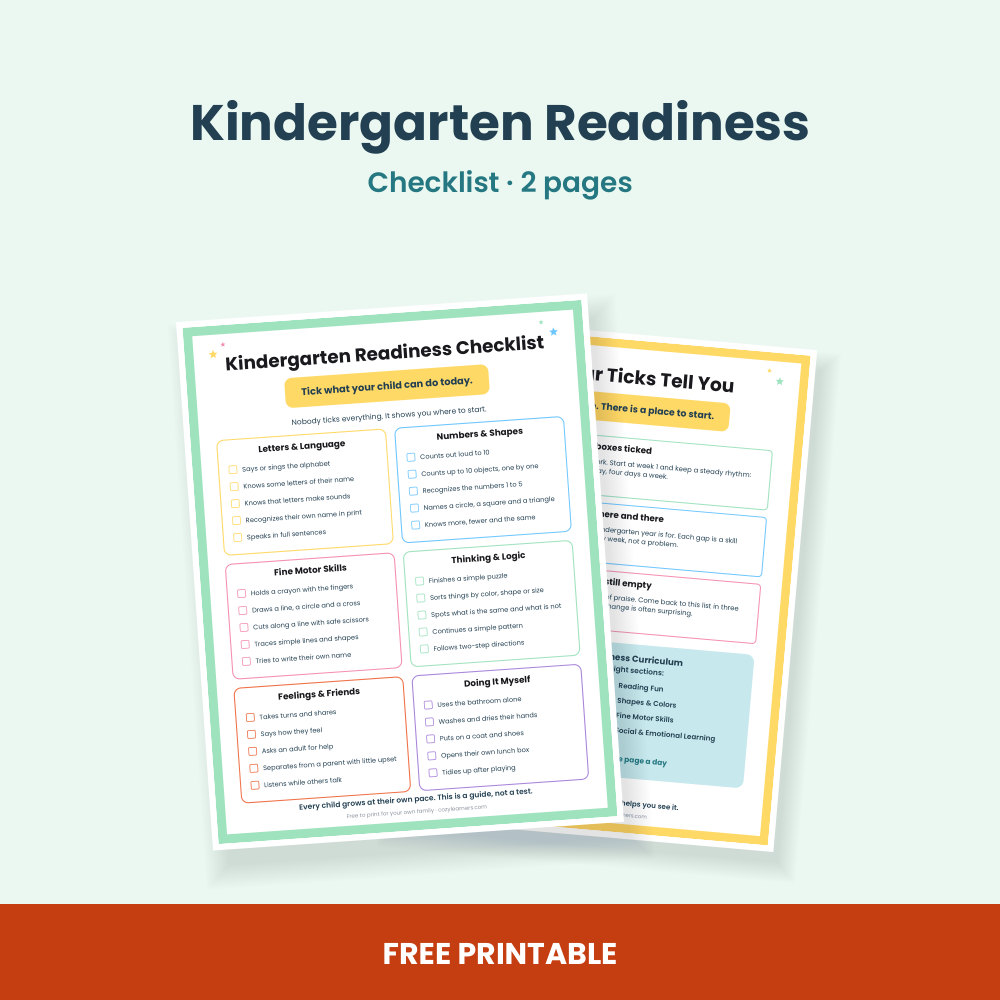
Free printable
Kindergarten Readiness Checklist
Thirty skills in six areas, from letters to tying shoes. Tick what your child can do today, and see where to start.