"Kindergarten Homeschool Schedule: A Simple Daily Routine That Works"
How long homeschool kindergarten really takes, a sample daily schedule and a weekly rhythm you can copy — plus how to keep it short, steady and fun.
By Cozy Learners · · 4 min read
The most common worry about homeschooling kindergarten is time: how many hours a day is this going to take? The honest answer is much less than you think. A five-year-old learns in short bursts, and most of a kindergarten day at school is lining up, waiting, transitions and snack.
This guide gives you a realistic kindergarten homeschool schedule — a daily routine and a weekly rhythm — that you can copy as it is or bend to fit your family.
How many hours a day is homeschool kindergarten?
For the "sit-down" part — letters, numbers, a worksheet — 15 to 30 minutes a day is enough for most five-year-olds. Add reading aloud, play, time outside and everyday life, and your child is learning all day without anyone calling it school.
A few guidelines that help:
- Short beats long. Ten focused minutes teach more than forty minutes of a tired child.
- Same time, same place. A routine matters more than the length. Children cooperate with what they expect.
- Stop while it is going well. End on a success, not on tears.
Check your state's homeschool rules too: a few states ask for a number of days or hours, and many do not regulate kindergarten at all.
A sample daily kindergarten homeschool schedule
Here is a simple morning that works for many families. Times are only a guide.
- 8:30 — Morning basket (5 minutes). Calendar, weather, a song, the day of the week.
- 8:35 — Learning time (15–20 minutes). One page from your curriculum: letters on one day, numbers on another. Sit next to your child.
- 8:55 — Move (10 minutes). Dance, jump, a walk around the block. Bodies need it after sitting.
- 9:05 — Read aloud (15 minutes). Picture books, chosen by your child as often as by you.
- 9:20 — Hands-on time (15–20 minutes). Play dough, building blocks, drawing, cutting, a puzzle.
- Afternoon — Play and life. Outside time, helping cook, errands, free play. Counting stairs and spotting letters on signs count as school.
That is under an hour and a half of anything that looks like "school", and only about twenty minutes at the table.
A weekly rhythm: four days, not five
Many homeschool families teach four days a week and keep the fifth for library visits, nature walks, co-op, catching up — or a day off. It is also what makes a school year fit around sick days and holidays without falling behind.
A simple four-day week might look like this:
- Monday — Letters and reading: a letter page, its sound, a word hunt around the house.
- Tuesday — Numbers and math: a number page, counting real objects, a simple pattern.
- Wednesday — Shapes and thinking: shapes, sorting, a maze or a "what doesn't belong" page.
- Thursday — The world and feelings: seasons, weather, kindness, talking about feelings.
- Friday — Free day: library, outings, art, or nothing at all.
Planning the whole year without planning every day
The hardest part of homeschool kindergarten is not teaching — it is deciding what to do each day. That is where a planned curriculum earns its keep: you open the book, find today's page, and teach.
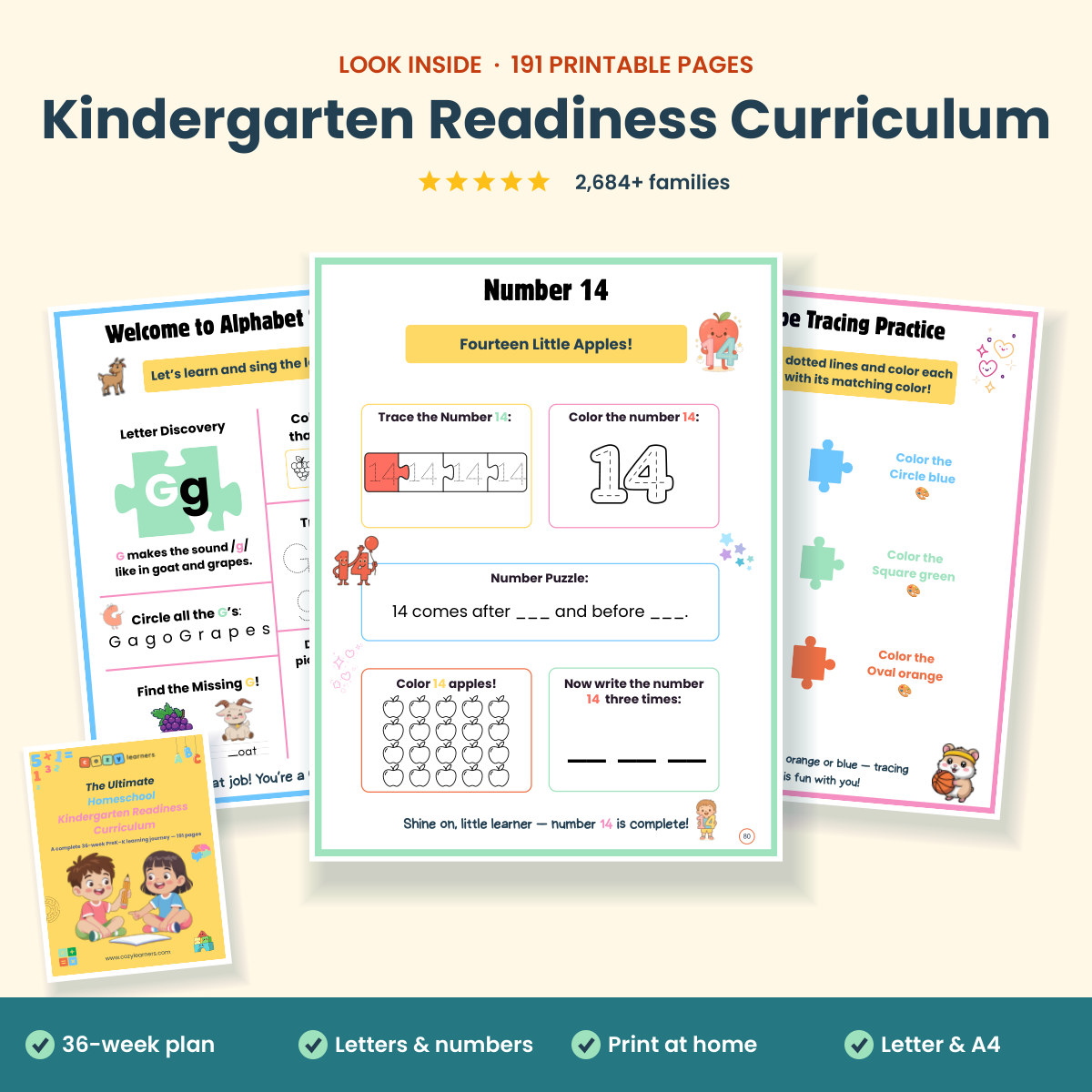
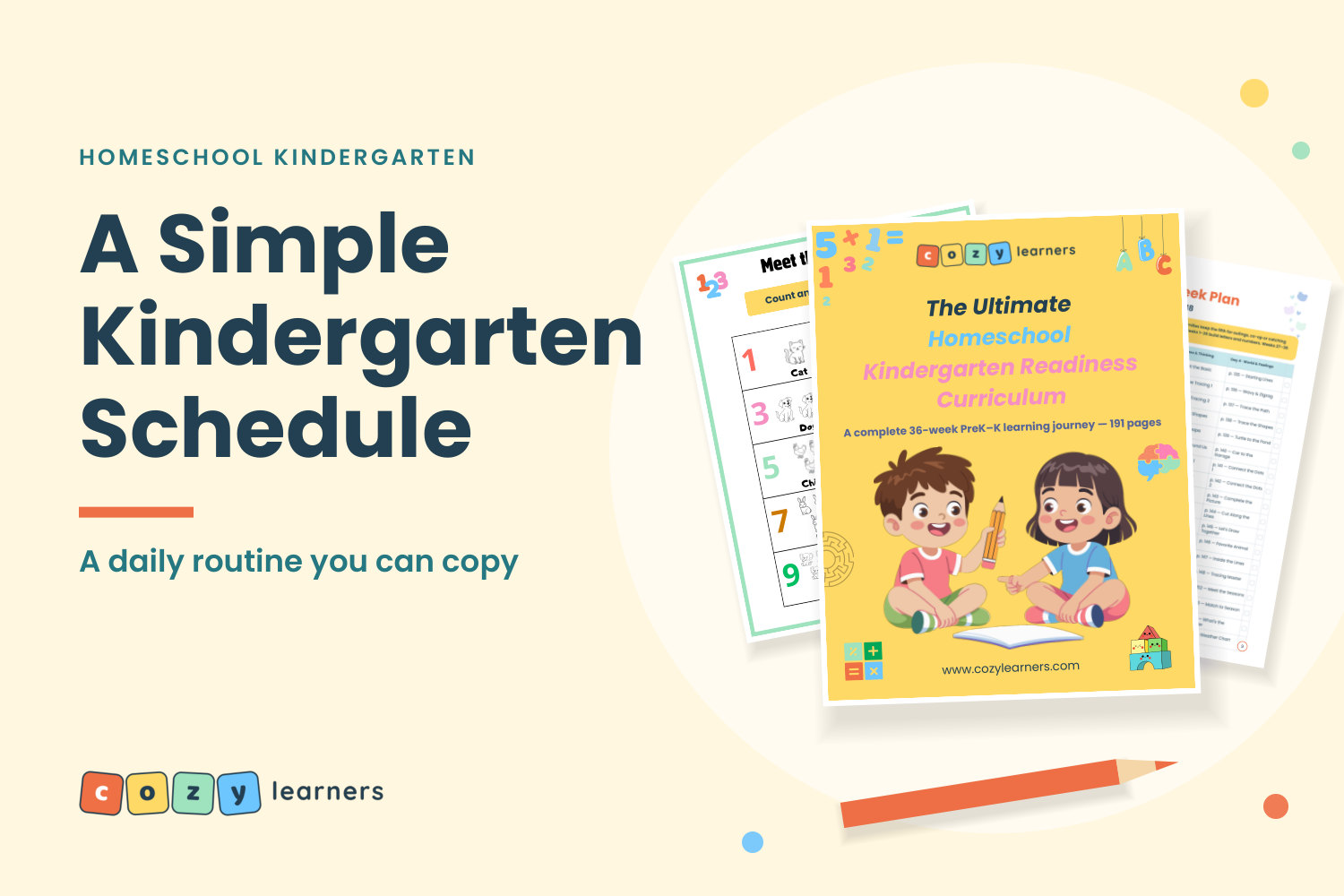
Our Kindergarten Readiness Curriculum is built exactly on the rhythm above: a 36-week plan, four days a week, one page a day, 15 to 20 minutes. Each day of the plan names the page to open — letters and reading, numbers and math, shapes and thinking, the world and feelings. You can print Week 1 free to try the routine for a week before you decide.
Tips to keep the schedule working
- Put the hardest thing first, while your child is fresh.
- Use a visual schedule. Pictures of each step on the fridge help a child know what comes next.
- Keep a "done" box. Finished pages go in a box or folder — it becomes your portfolio, which some states ask for.
- Expect off days. Skip, try again tomorrow. Kindergarten is not a race.
- Watch the child, not the clock. If ten minutes is all your child has today, ten minutes is the right length.
Where to start
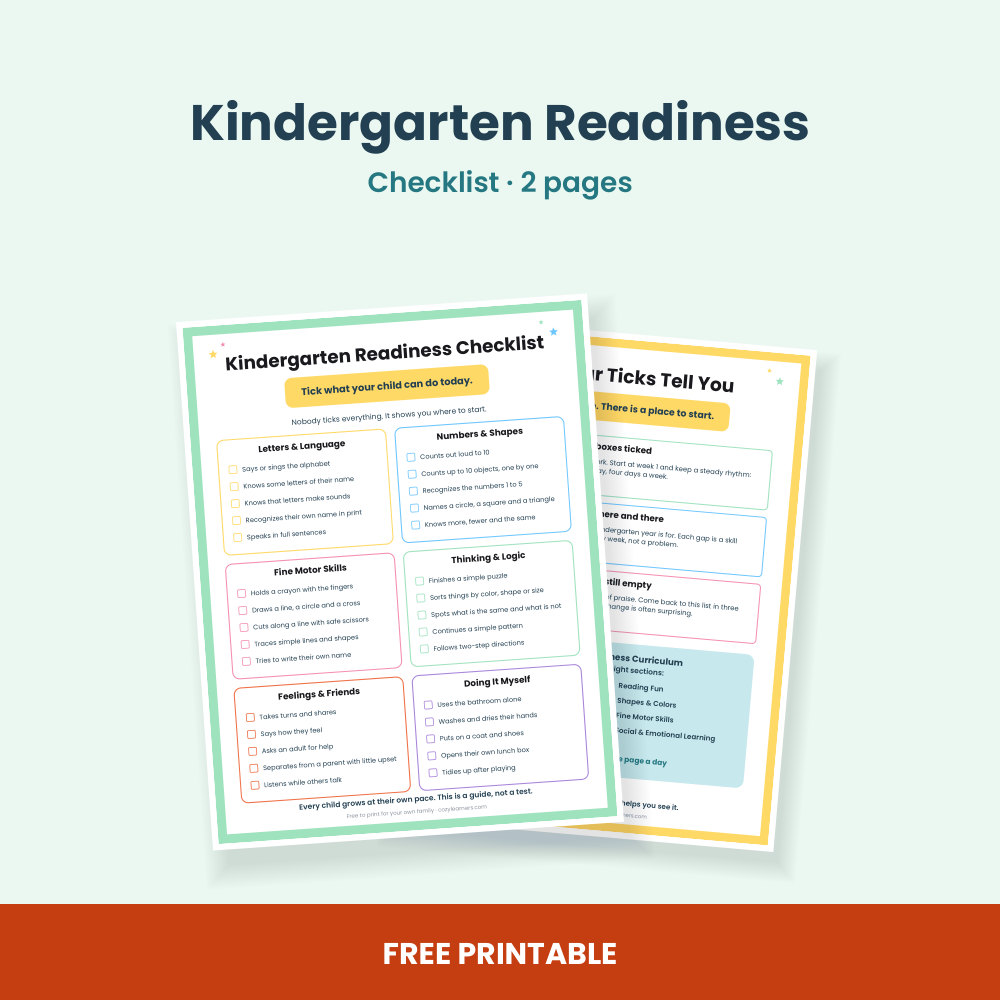
Not sure what your child already knows? Our free kindergarten readiness checklist lists thirty skills in six areas and tells you where to begin. For the bigger picture, read how to homeschool kindergarten, and if you are starting mid-year, how to start homeschool kindergarten in January.
Free printable
Kindergarten Readiness Checklist
Thirty skills in six areas, from letters to tying shoes. Tick what your child can do today, and see where to start.