"25 Fine Motor Activities for Preschoolers (Easy Ideas at Home)"
Twenty-five simple fine motor activities for preschoolers ages 3 to 5 — play dough, cutting, threading, tracing and everyday jobs — that build the hand strength a child needs to hold a pencil, with free printable tracing and cutting pages.
By Cozy Learners · · 4 min read
Fine motor skills are the small movements of the hands and fingers: pinching, squeezing, twisting, cutting, holding a crayon. They are what a child needs before writing — a three-year-old who has spent months squeezing play dough and snipping paper picks up a pencil far more easily than one who goes straight to worksheets.
Here are twenty-five fine motor activities for preschoolers, most with things you already have at home. Pick one or two a day, five to ten minutes each.
Squeeze and pinch: build hand strength
- Play dough. Roll snakes, squash balls, pinch tiny pieces, cut with a plastic knife. The single best fine motor toy there is.
- Clothespins. Clip them around the edge of a paper plate or a box, then unclip them.
- Tongs and pom-poms. Move pom-poms, cotton balls or cereal from one bowl to another with kitchen tongs or tweezers.
- Spray bottles. Water the plants or "wash" the outside window. Squeezing the trigger strengthens the whole hand.
- Tearing paper. Tear scrap paper into small pieces and glue them onto a drawing — a mosaic.
- Sponges. Squeeze a wet sponge into a bowl at bath time.
Twist, turn and thread
- Lids and jars. Fill a basket with clean jars and lids to open and close.
- Nuts and bolts. Large plastic ones, or real ones in a size that cannot be swallowed.
- Threading. Thread big beads, pasta or cereal loops onto a shoelace or pipe cleaner.
- Lacing cards. Punch holes around a cardboard shape and lace yarn through them.
- Stickers. Peeling a sticker off its sheet takes real finger control. Ask your child to stick them on a line or in a circle.
- Building bricks. Pressing small bricks together and pulling them apart.
Cut, draw and trace
- Snipping strips. Start with narrow paper strips your child can cut in one snip.
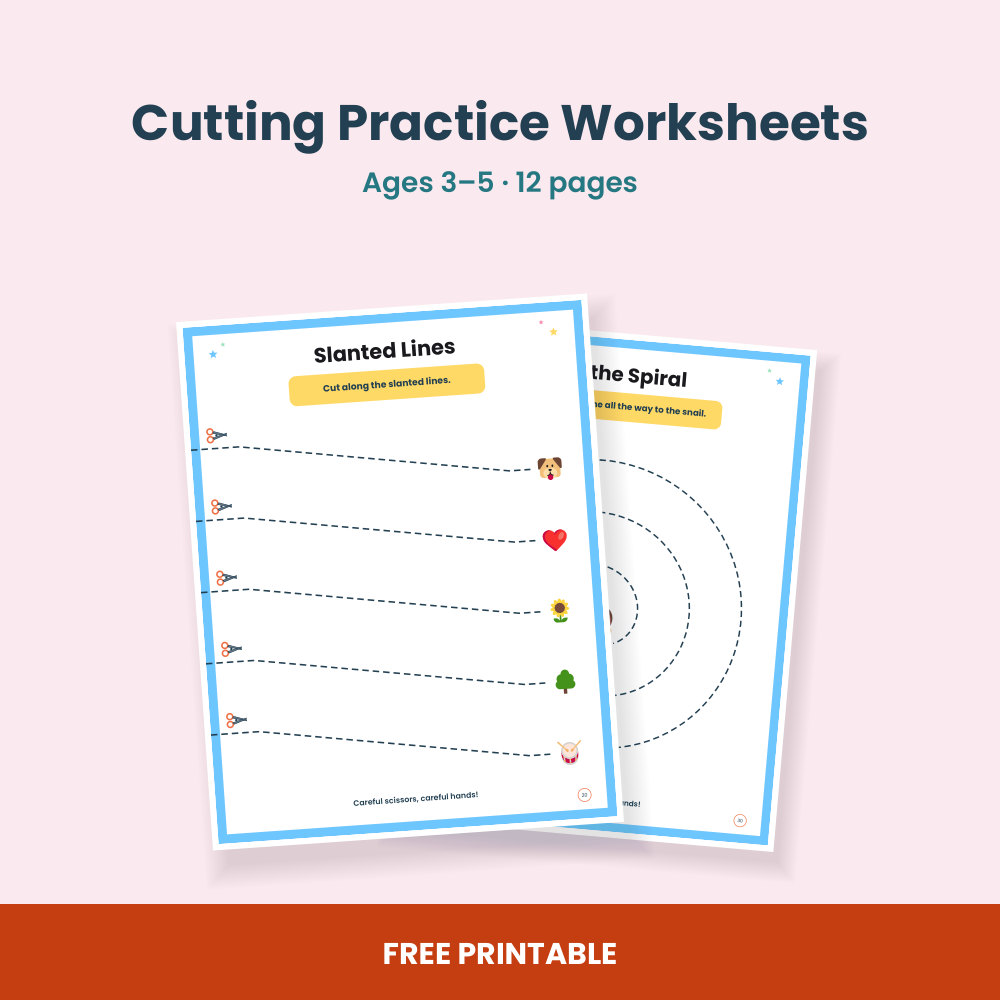
- Cutting lines. Straight lines first, then zigzags, waves and curves, then circles. Our free cutting practice worksheets go in exactly that order, from straight lines to a spiral.
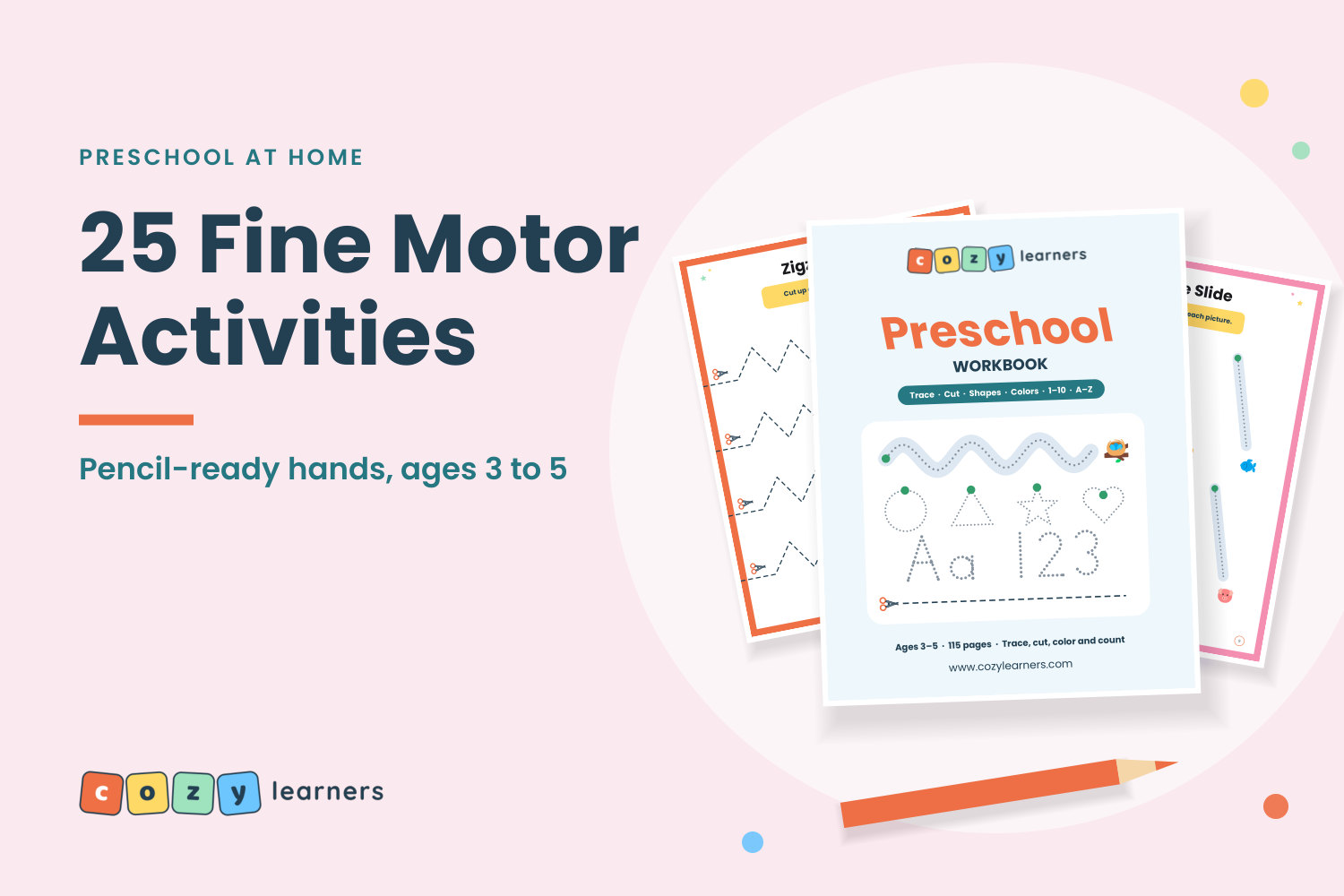
- Tracing paths. Follow a dotted line from a picture to a picture — lines down, across, slanted, waves, loops. Our free pre-writing worksheets have ten pages of them, no email needed.
- Drawing on a vertical surface. Chalk on a wall or a sheet of paper taped to the fridge — it puts the wrist in the right position for writing.
- Short crayons. Break crayons in half. Short crayons make children hold them with their fingertips instead of their fist.
- Dot markers and stamps. Press inside circles, along a line, or on the letters of their name.
- Coloring inside big shapes. Not for neatness — for control.
Everyday jobs that count
- Buttons, zips and snaps on their own coat.
- Pouring water or rice from a small jug into a cup.
- Spreading butter on toast with a small knife.
- Peeling a clementine or a banana.
- Folding napkins or washcloths in half, then in half again.
- Picking up small things: coins into a piggy bank, beans into a bottle (with a grown-up close by).
How do I know if my child's fine motor skills are on track?
Every child grows at their own pace, but many children:
- around 3 hold a crayon with their fingers, draw a line and a circle, and snip paper with scissors;
- around 4 cut along a straight line, draw a cross and a simple person, and trace simple paths;
- around 5 cut out a circle, copy a square and a triangle, and write some letters of their name.
If you have concerns, your pediatrician can point you to an occupational therapist.
From fine motor to writing
Once the hands are strong and the strokes are smooth, letters come next: our alphabet tracing worksheets cover A to Z, and the name tracing generator makes a page with your child's own name.
Free fine motor printables, and a whole workbook
- Cutting practice worksheets — 10 pages for ages 3 to 5.
- Pre-writing worksheets — 10 line tracing pages.
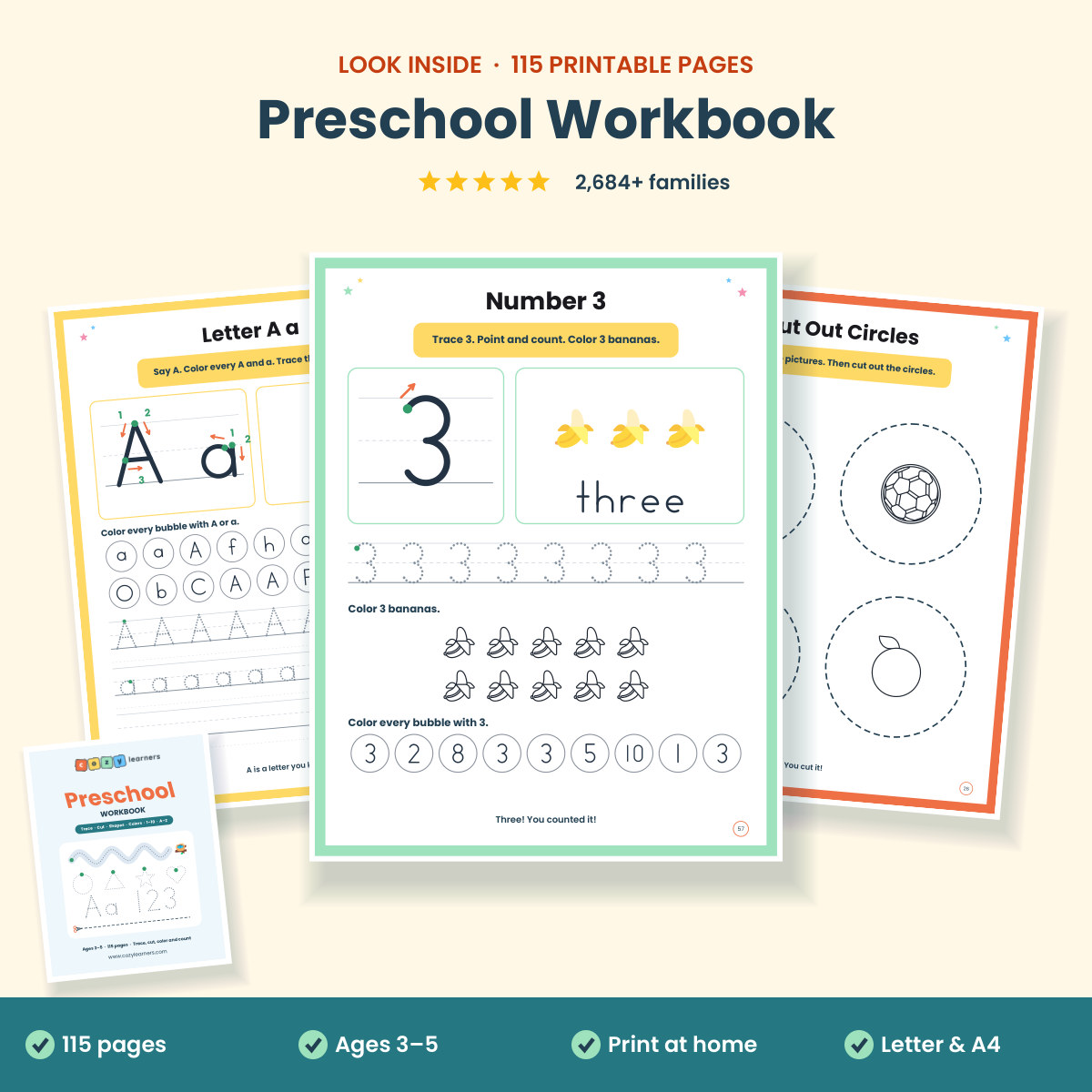
Our Preschool Workbook puts it all in order, the way a preschooler grows: tracing paths, 13 cutting pages from straight lines to a spiral, shapes, colors, numbers, every letter from A to Z, and 8 mazes from easy to harder.
Free printable
Cutting Practice Worksheets
10 cutting practice worksheets from our Preschool Workbook, for ages 3 to 5: straight, slanted, zigzag, wavy, hill and step lines, circles to cut out, and a spiral.