How to use these alphabet tracing worksheets
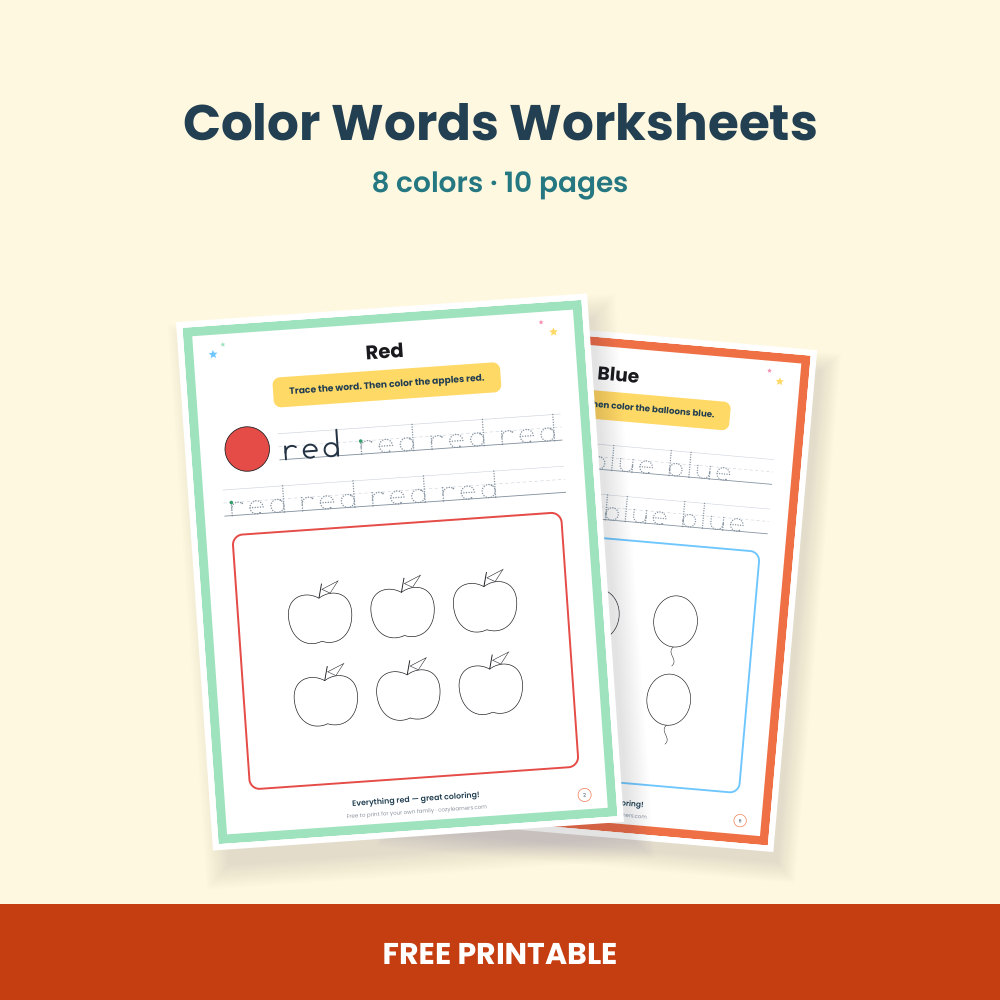
There are eight worksheets: capital letters A to Z on four pages, then lowercase letters a to z on four pages. Each row starts with one solid letter to look at, then a whole row of dotted letters to trace.
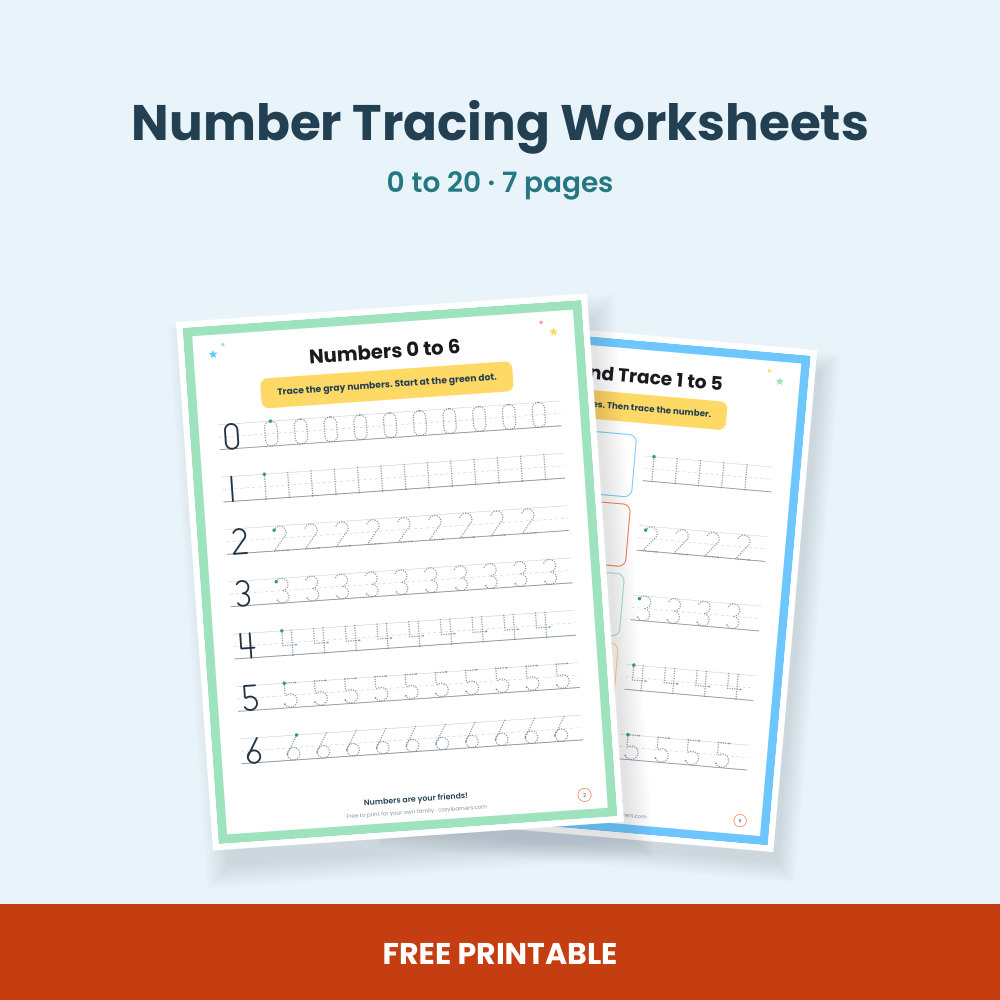
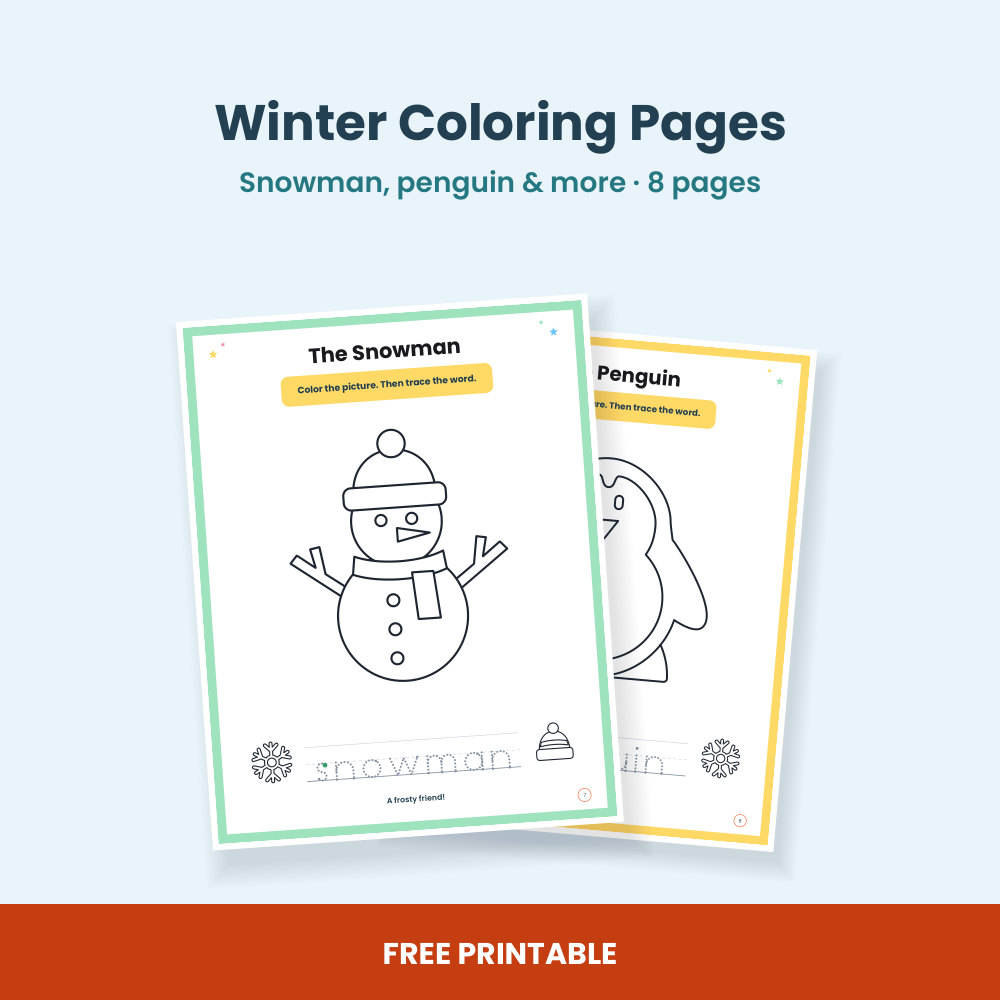
- Start at the green dot. It shows where the pencil goes down first.
- Say the letter's name and its sound as your child traces: "B — /b/, /b/, ball".
- One page a day is plenty at four or five. Stop while it is still fun.
- Capitals first, then lowercase. Capitals are made of straighter lines and are easier to begin with.
Capitals or lowercase first?
Most children learn to write capitals first, because they are made of simple lines — down, across, slanted — and start at the top line. Lowercase letters are harder: they are smaller, many are round, and some go below the line (g, j, p, q, y). But most of what children read is lowercase, so once the capitals are easy, move on.
Tips that help
- A thick crayon or a short triangle pencil is easier for small hands than a long, thin pencil.
- Sit at a table, feet flat, the paper a little tilted toward the writing hand.
- Trace each letter slowly. Neat and slow beats fast and messy.
- Slip a page into a sheet protector and trace it with a dry-erase marker to use it again and again.
- Wobbly letters are how neat letters begin — praise the trying.
When is a child ready?
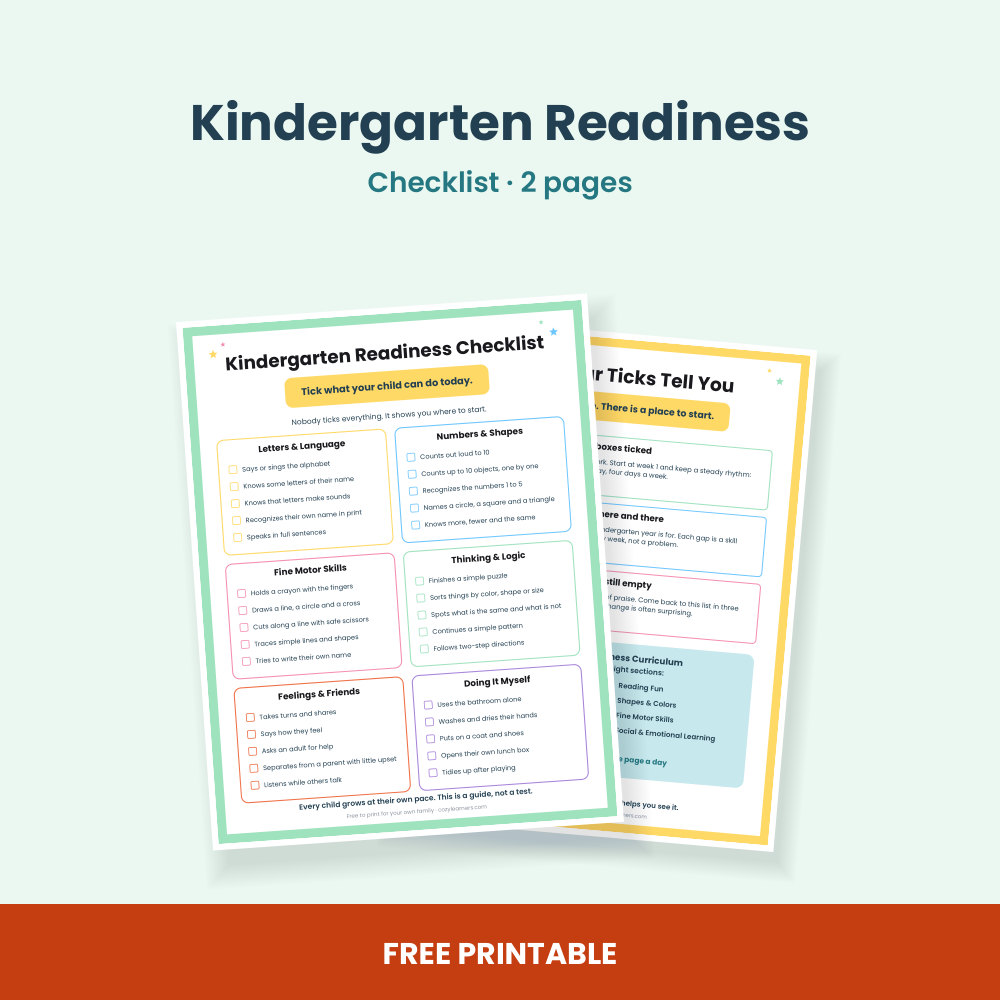
Many children start tracing letters around age 4, once they can hold a crayon with their fingers and draw a line, a circle and a cross. If tracing is still hard, go back to lines and shapes for a few weeks. Our Kindergarten Readiness Checklist shows the skills that come first.
More free tracing
- Make a page with your child's own name in the same letters: free name tracing generator.
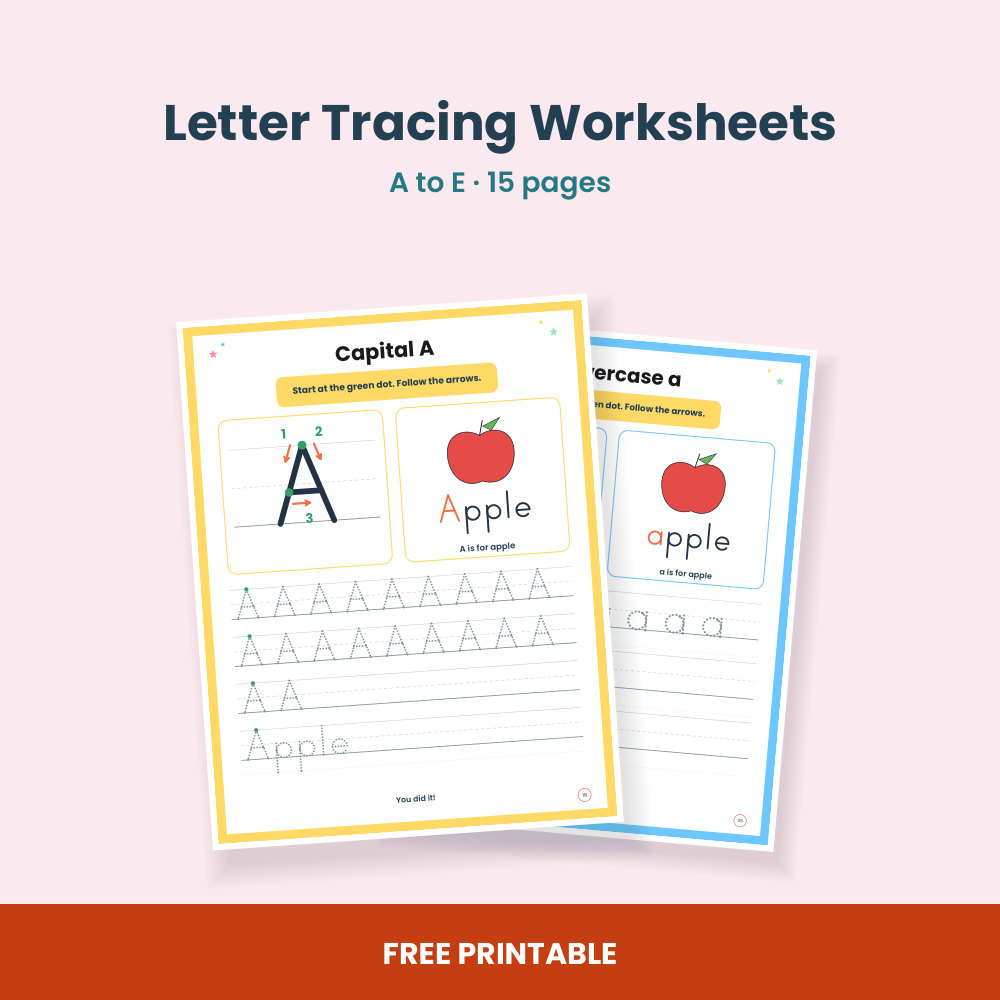
- One letter per page, with a word and a picture: letter tracing worksheets A to E.
- Ideas away from the paper: letter recognition activities.
US Letter or A4
The download comes in both sizes: US Letter for the United States and Canada, A4 for the UK, Europe, Australia and most other countries.
Want the whole handwriting workbook?
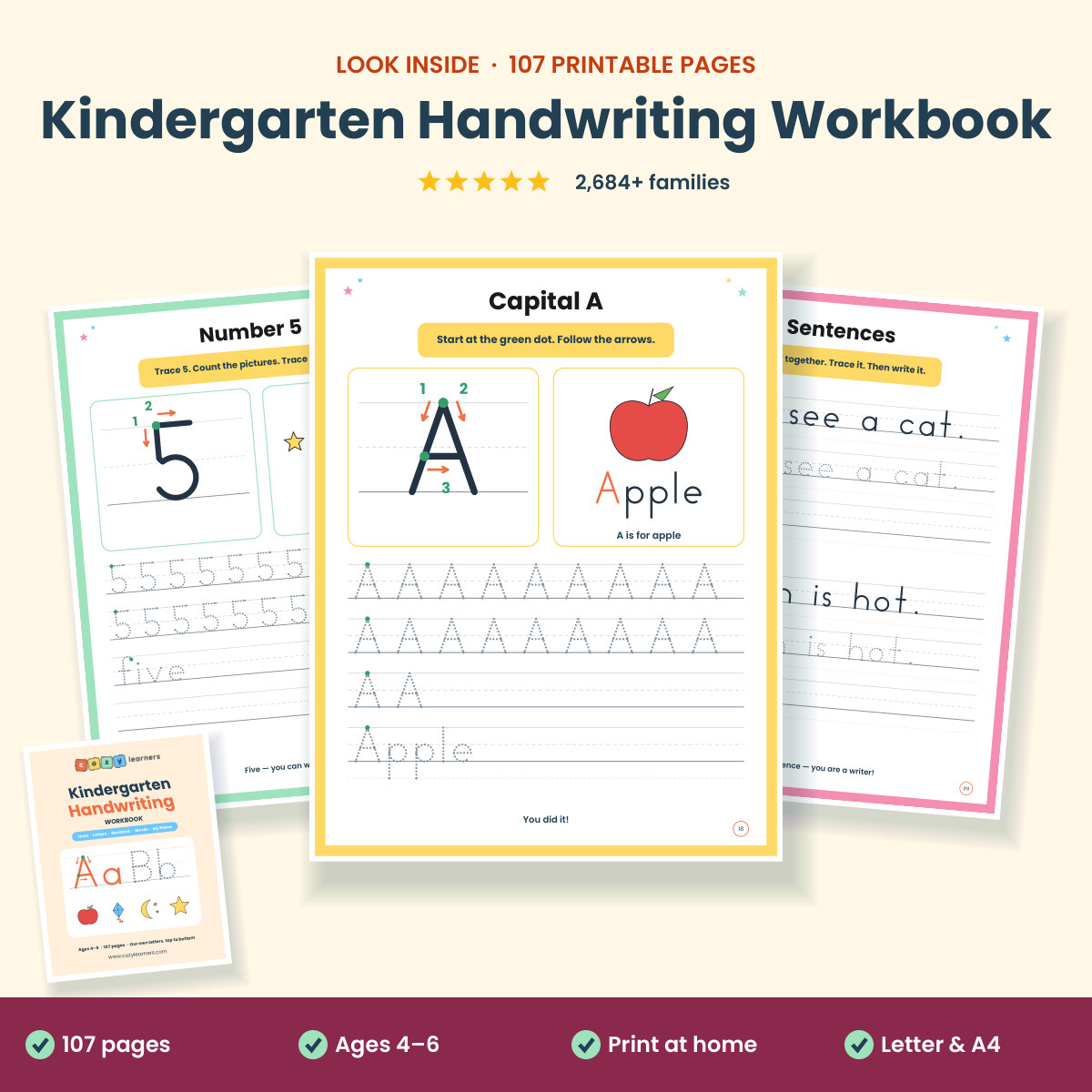
These pages use the same letters as our Kindergarten Handwriting Workbook: 107 pages with a full page for every capital and every lowercase letter, numbers 0 to 20, words, sentences and their own name.