How to use this feelings chart
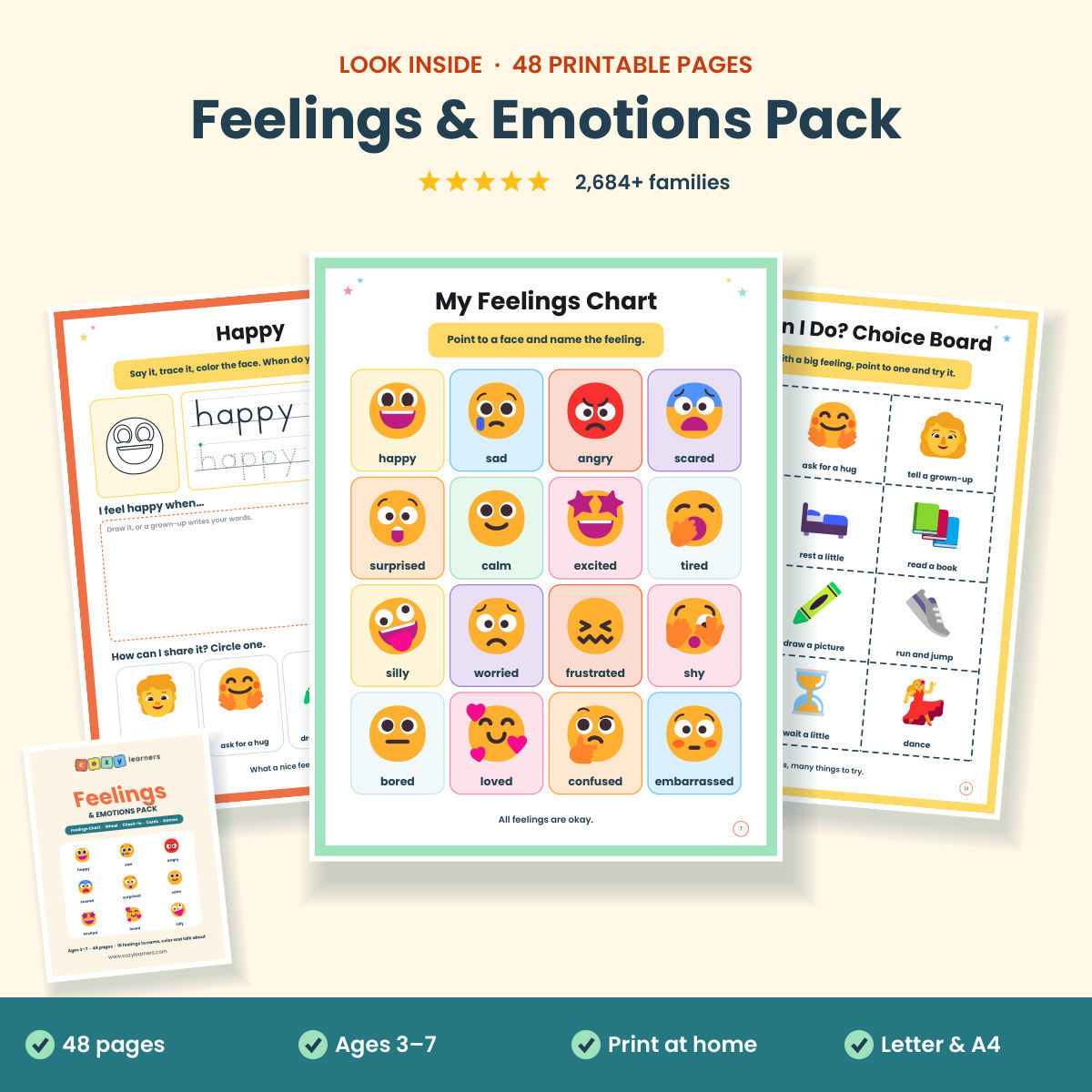
A feelings chart gives a young child the words for what is going on inside. Hang it where your child can see it — the fridge, the bedroom door, the homeschool wall — and use it a little every day.
- Name it together: point to a face and say the word. “This is frustrated. When the tower keeps falling, I feel frustrated.”
- Make the faces: look in a mirror and try each one.
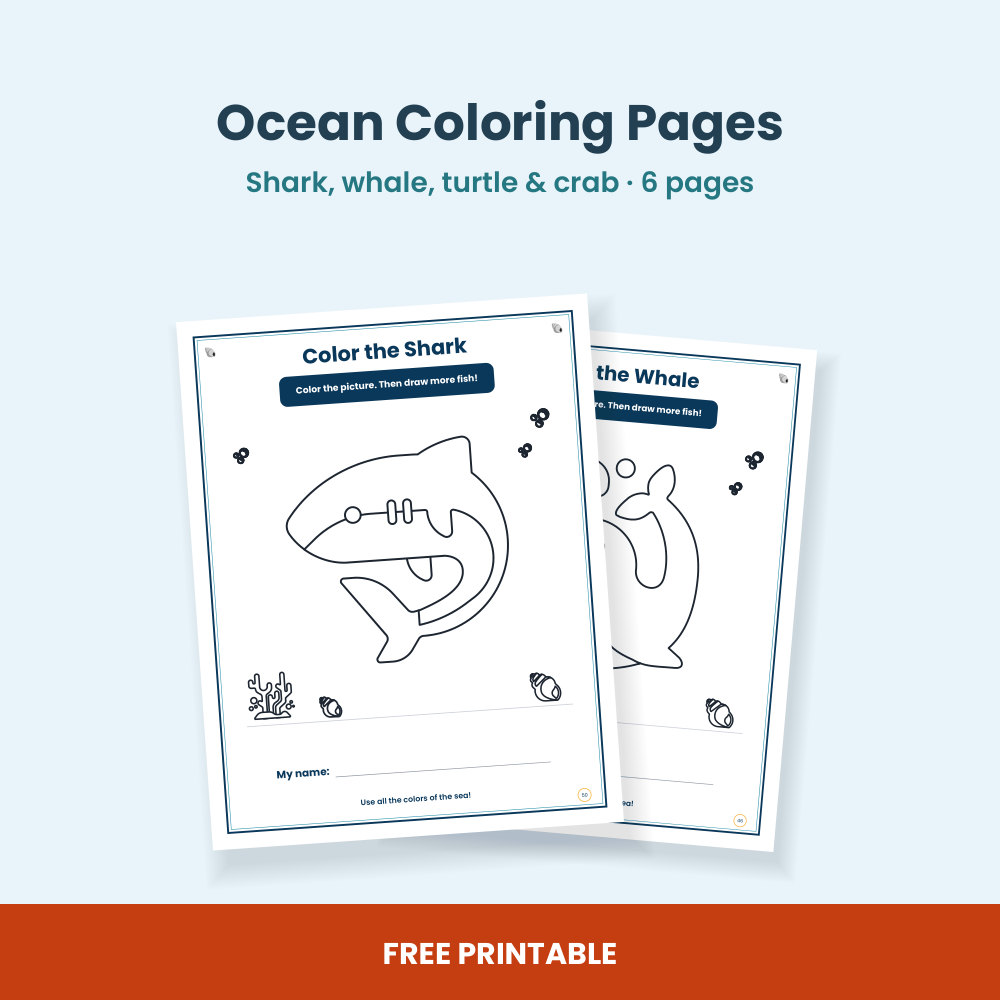
- Color the second chart: coloring each face is a calm way to talk about each feeling.
The daily check-in
“How are you feeling today?” takes one minute. In the morning or after school, your child points to a face — or clips a clothespin on it. Glue the page on cardstock first so it lasts. Share your own feeling too: children learn feelings by watching ours.
The 16 feelings
Happy, sad, angry, scared, surprised, calm, excited, tired, silly, worried, frustrated, shy, bored, loved, confused and embarrassed.
Every feeling is okay
Anger, fear and sadness are not bad feelings — they are hard ones. What we do with a feeling can be okay or not; the feeling itself always is.
US Letter or A4
The download comes in both sizes: US Letter for the United States and Canada, A4 for the UK, Europe, Australia and most other countries.
Want the whole pack?
These pages come from our Feelings & Emotions Pack: 48 pages with a feelings wheel for kids, a calm-down choice board, “I feel… because… I need…” sentences, a page for every feeling, feelings games, bingo and 32 feeling cards, for ages 3 to 7.