How to use these number tracing worksheets
There are five worksheets. The first three have every number from 0 to 20 on its own row: one solid number to look at, then a row of dotted numbers to trace. The last two are count and trace: count the pictures in the box, then trace the number that says how many.
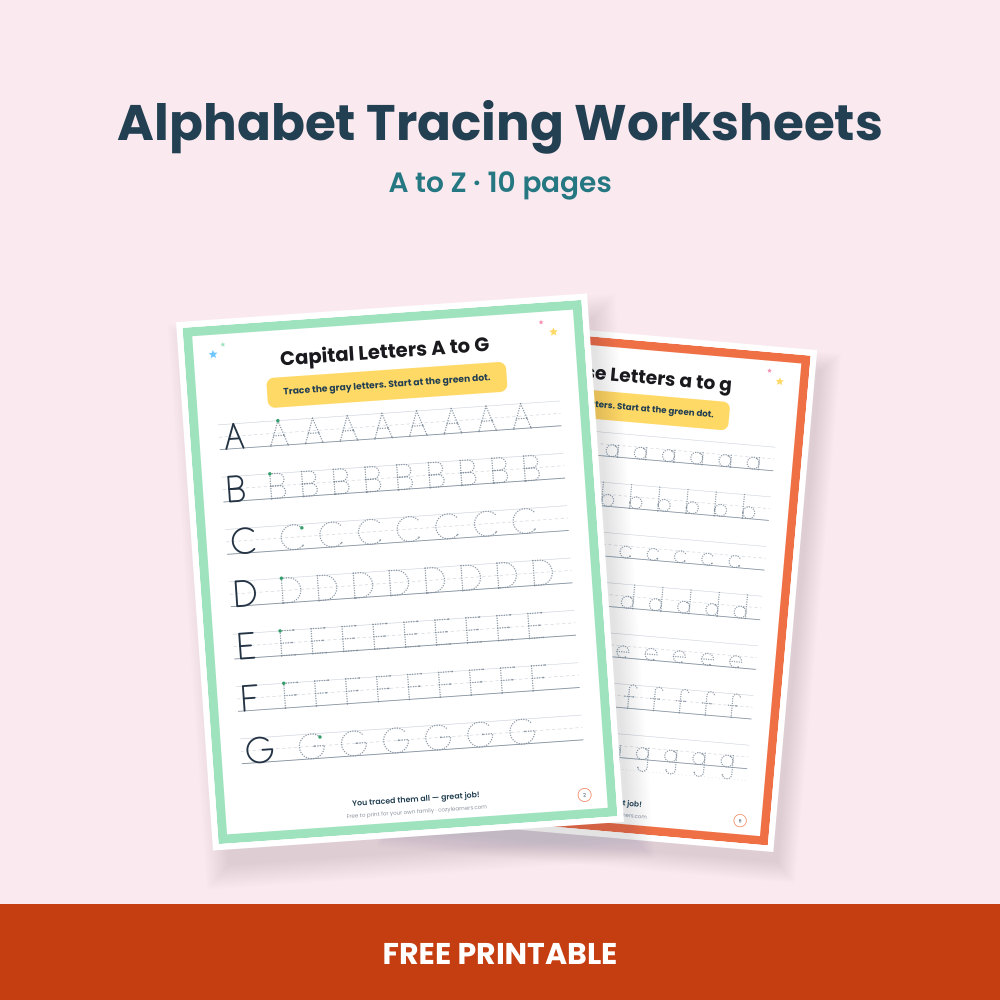
- Start at the green dot. It shows where the pencil goes down first.
- Say the number out loud each time you trace it.
- Count and trace first, then the rows. For a child who is just starting, the count-and-trace pages give each number a meaning.
- One page a day is plenty. Stop while it is still fun.
Why trace numbers?
Writing a number and knowing what it means are two different skills. Tracing teaches the shape and the direction — top to bottom, left to right — so the number comes out the same way each time. Counting pictures teaches what the number stands for. Doing both together is how 3 stops being a squiggle and becomes "three things".
Numbers that get reversed
Many children write 2, 3, 5, 7 and 9 backwards for a while. It is normal at four and five, and it usually fixes itself with practice. Starting at the green dot every time is the best help: the starting point decides which way the number faces.
Tips that help
- Count real things all day: stairs, spoons, cars, crackers. Touch each one as you count.
- Use a thick crayon or a short triangle pencil.
- Slip a page into a sheet protector and trace with a dry-erase marker to use it again.
- Teen numbers are tricky: 14 is said "four-teen" but written 1 then 4. Point to each digit as you say it.
More free math
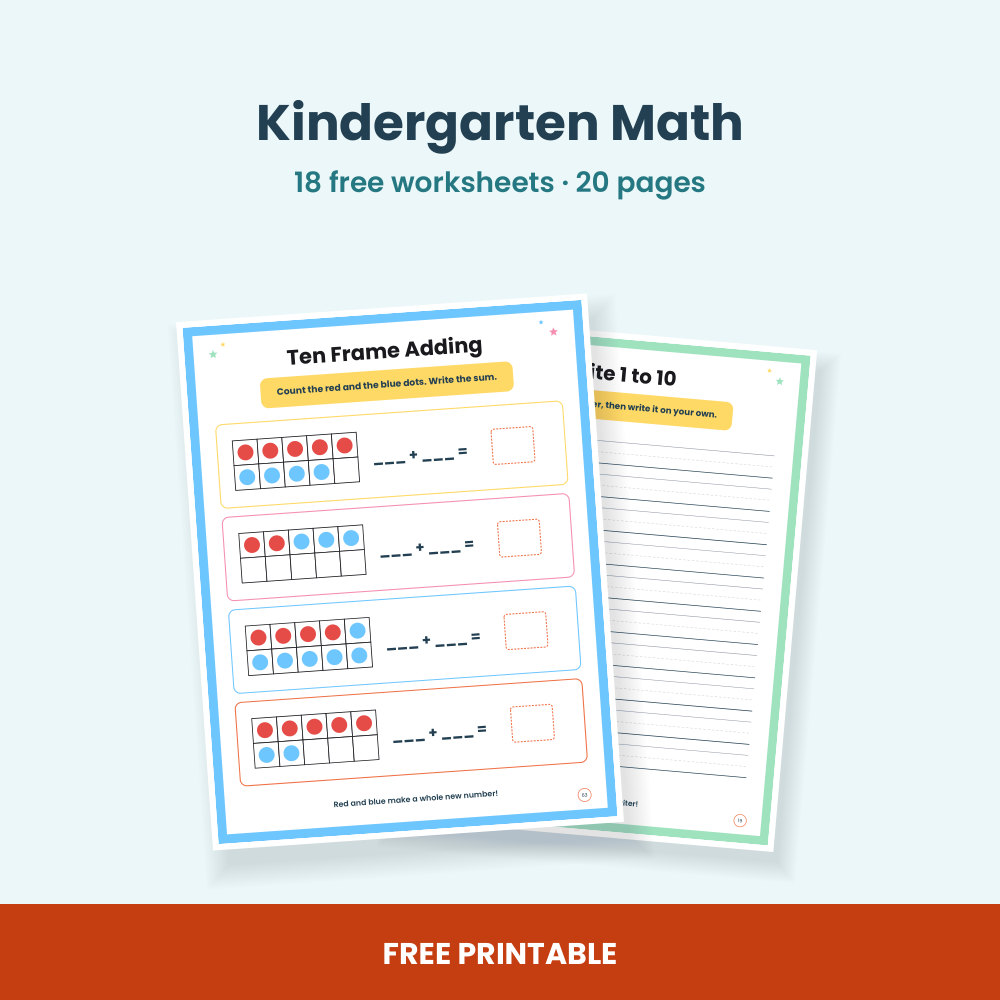
Our kindergarten math worksheets have 18 free pages, one for each kindergarten math skill, and kindergarten math at home explains what to teach, with ten counting activities.
US Letter or A4
The download comes in both sizes: US Letter for the United States and Canada, A4 for the UK, Europe, Australia and most other countries.
Want the whole math workbook?
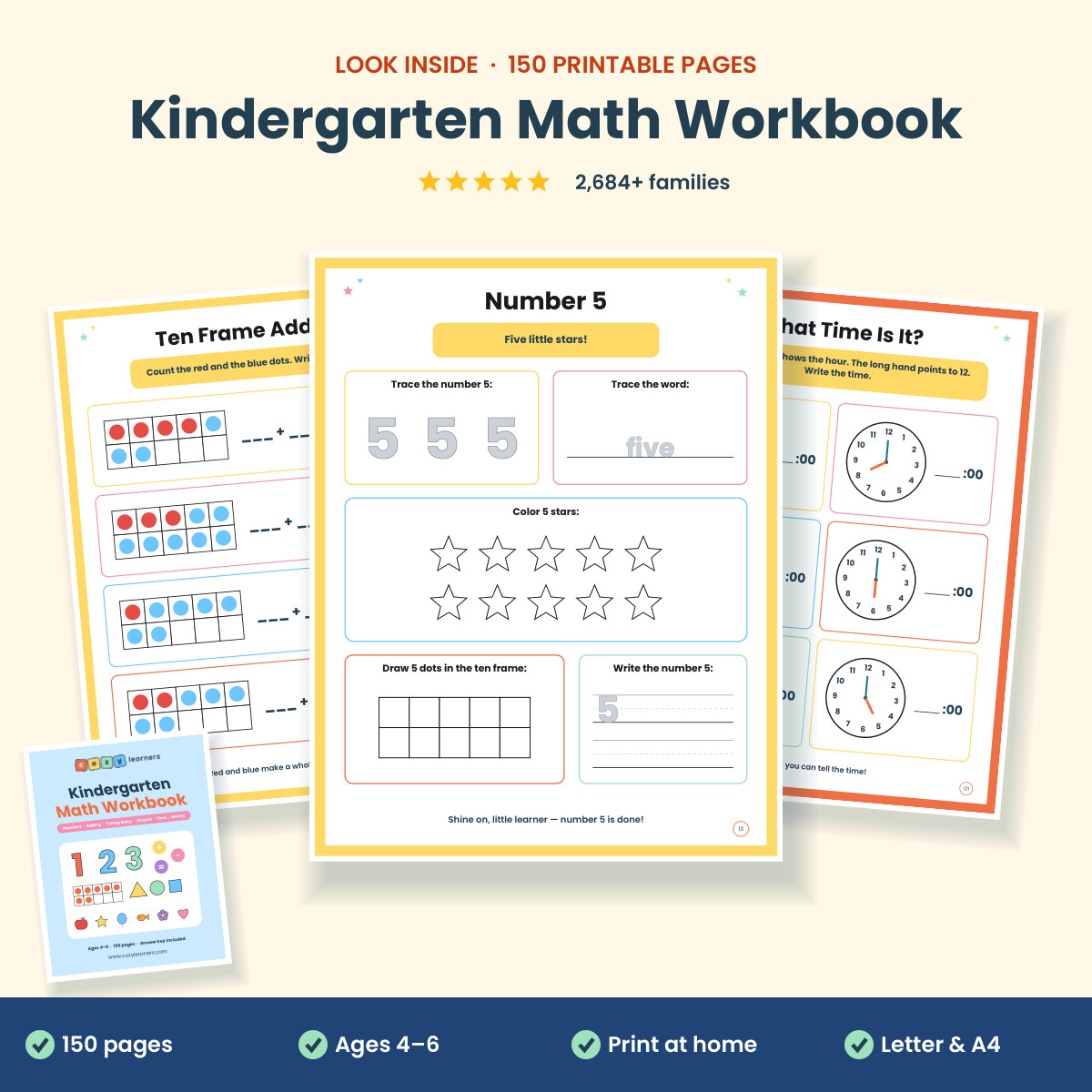
Our Kindergarten Math Workbook has 150 pages in nine sections, with a 36-week plan of about four pages a week and an answer key for grown-ups at the back.