"How to Teach Sight Words: 10 Simple Ways at Home"
What sight words are, when to start, how many to teach at a time, and ten simple, playful ways to help a preschooler or kindergartner learn them — with free printable sight word worksheets.
By Cozy Learners · · 4 min read
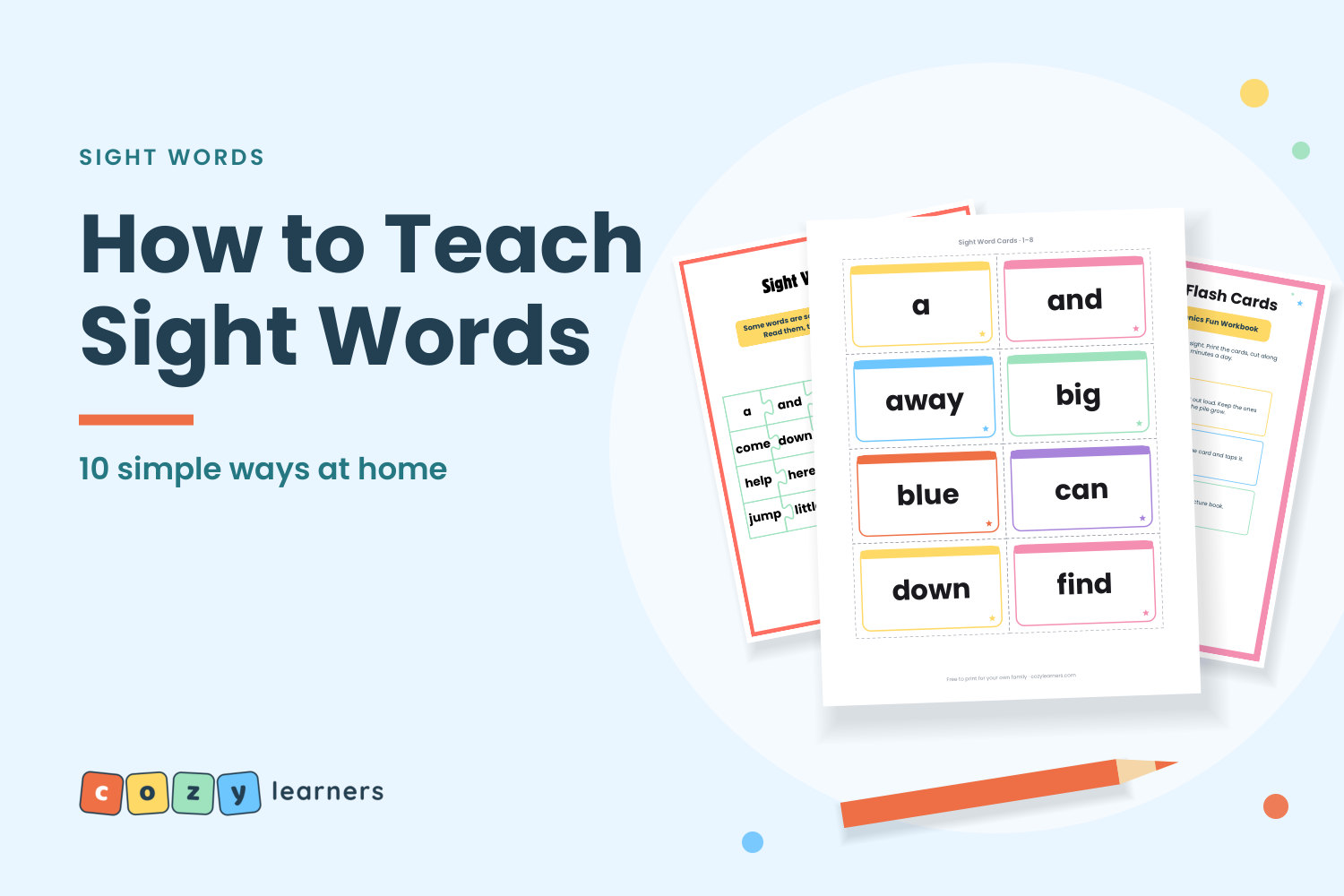
Sight words are the small, very common words a child learns to recognize at a glance — the, and, is, you, said. They show up in almost every sentence, so a child who knows them reads much more smoothly. Many of them also break the usual phonics rules (try sounding out said or was), which is why they are learned by sight.
Here is how to teach sight words at home, step by step, with ten simple ways to practice that take a few minutes a day.
When should a child start sight words?
Most children are ready around four or five, once they know most letter names and some letter sounds. Sight words work best alongside phonics, not instead of it: phonics lets a child sound out cat and hop, and sight words cover the tricky, common words phonics cannot.
If your child is three, or still learning letters, spend the time on letters and sounds first. Our letter recognition activities are a good place to start.
Which sight words first?
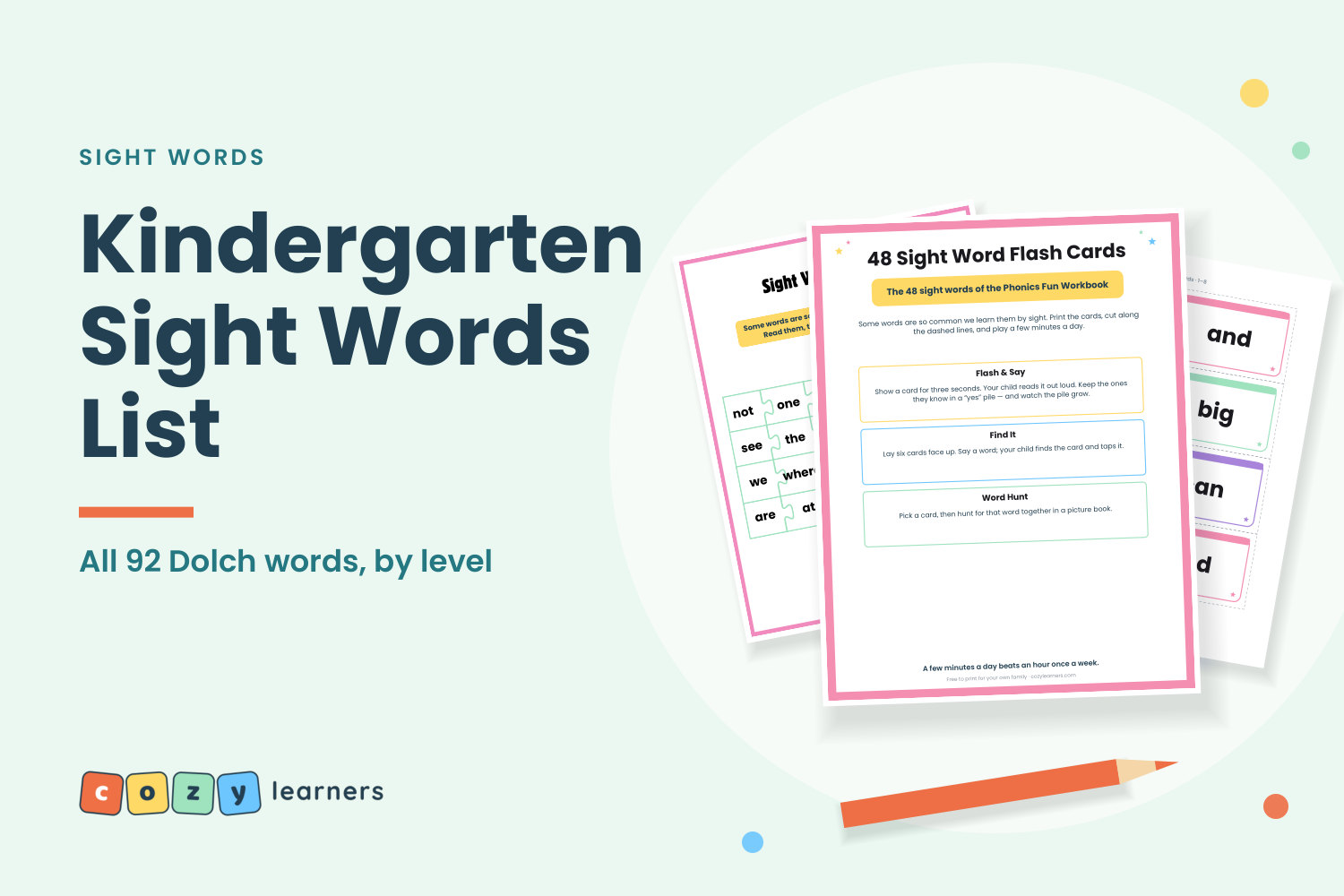
Start with the words your child will meet most often in early books: a, I, the, and, is, it, in, can, see, you, we, my, to, go, said. The Dolch list groups the most common words by level; the kindergarten levels (pre-primer and primer) have 92 words in all.
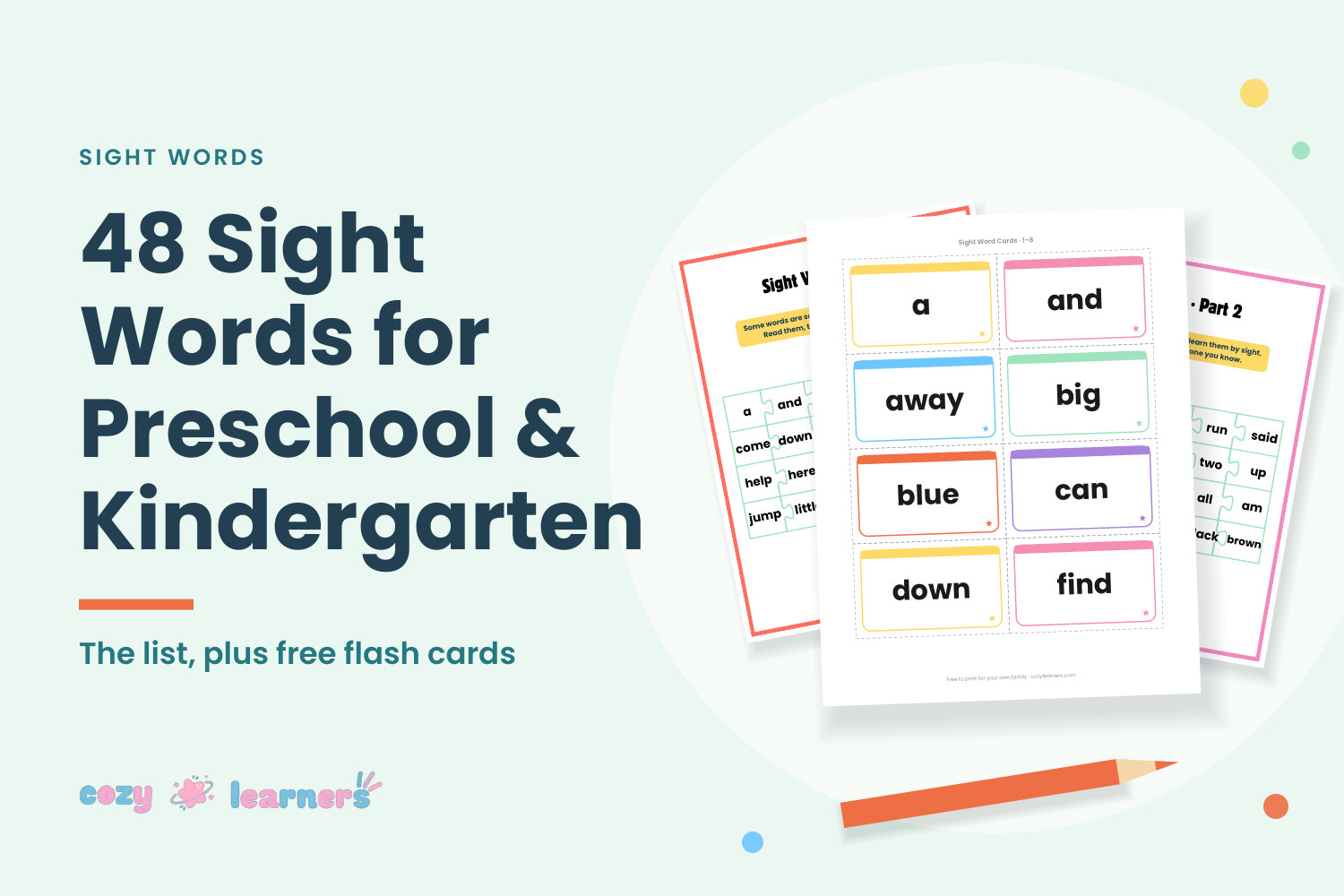
Our sight words list for preschool and kindergarten has the 48 words to teach first, in a printable list.
How many sight words at a time?
Two or three new words a week is plenty for most children. Keep reviewing the old ones as you add new ones — a word is "known" when your child reads it instantly, in a book, without stopping, on several different days.
10 simple ways to teach sight words
- See it, say it, spell it, say it again. Show the card, read the word, spell it letter by letter together, then read it again. Thirty seconds per word.
- Trace and write. Trace the word with a finger, then a crayon, then write it alone. Moving the hand helps the eyes remember.
- Word hunt in a book. Pick one word — the — and find every the on a page of a picture book.
- Flash card slap. Lay four cards on the table, say a word, and your child slaps the right one. Swap roles so they get to be the caller.
- Sight word hopscotch. Write words in chalk on the sidewalk; your child reads each word as they land on it.
- Memory match. Two cards for each word, face down. Read the word on every card you turn over.
- Sentence building. Use cards to build short sentences — I can see a cat — and read them together.
- Find it among look-alikes. Circle was in a row of was, saw, was, wax. This trains the eyes to look at every letter.
- Bingo. A family game with words instead of numbers; whoever calls has to read too.
- Read real books. Easy readers built on sight words and short phonics words let your child use what they learned — the best reward there is.
Make it stick
- A few minutes, every day, beats one long session a week.
- Mix old and new words. Review keeps the early words from slipping away.
- Celebrate. A "words I can read" wall or a sticker for every new word makes progress visible.
- Stop before it becomes a chore. If your child is tired, read them a story instead.
Free sight word printables
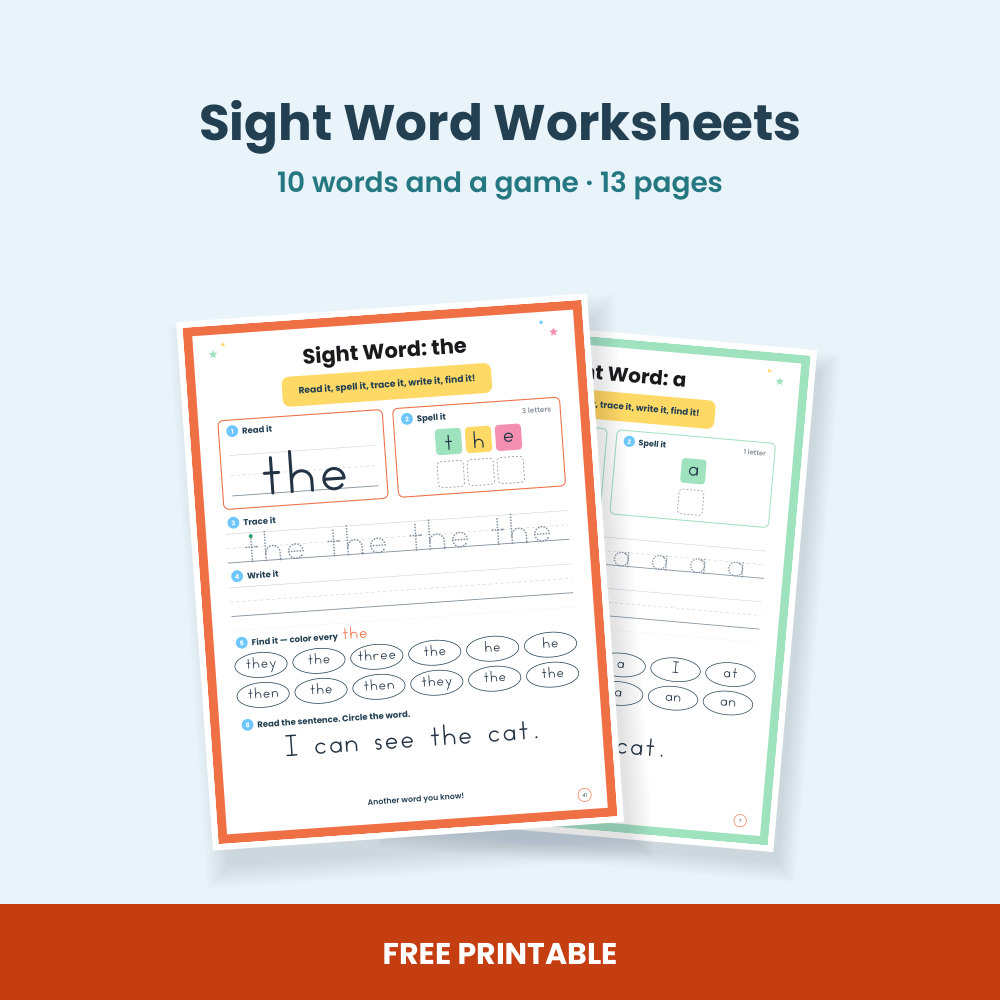
Start with our free sight word worksheets: ten of the most common words, a page each — read, spell, trace, write and find the word — and a word search. For games, print our 48 sight word flash cards.
Want all 92 kindergarten sight words?
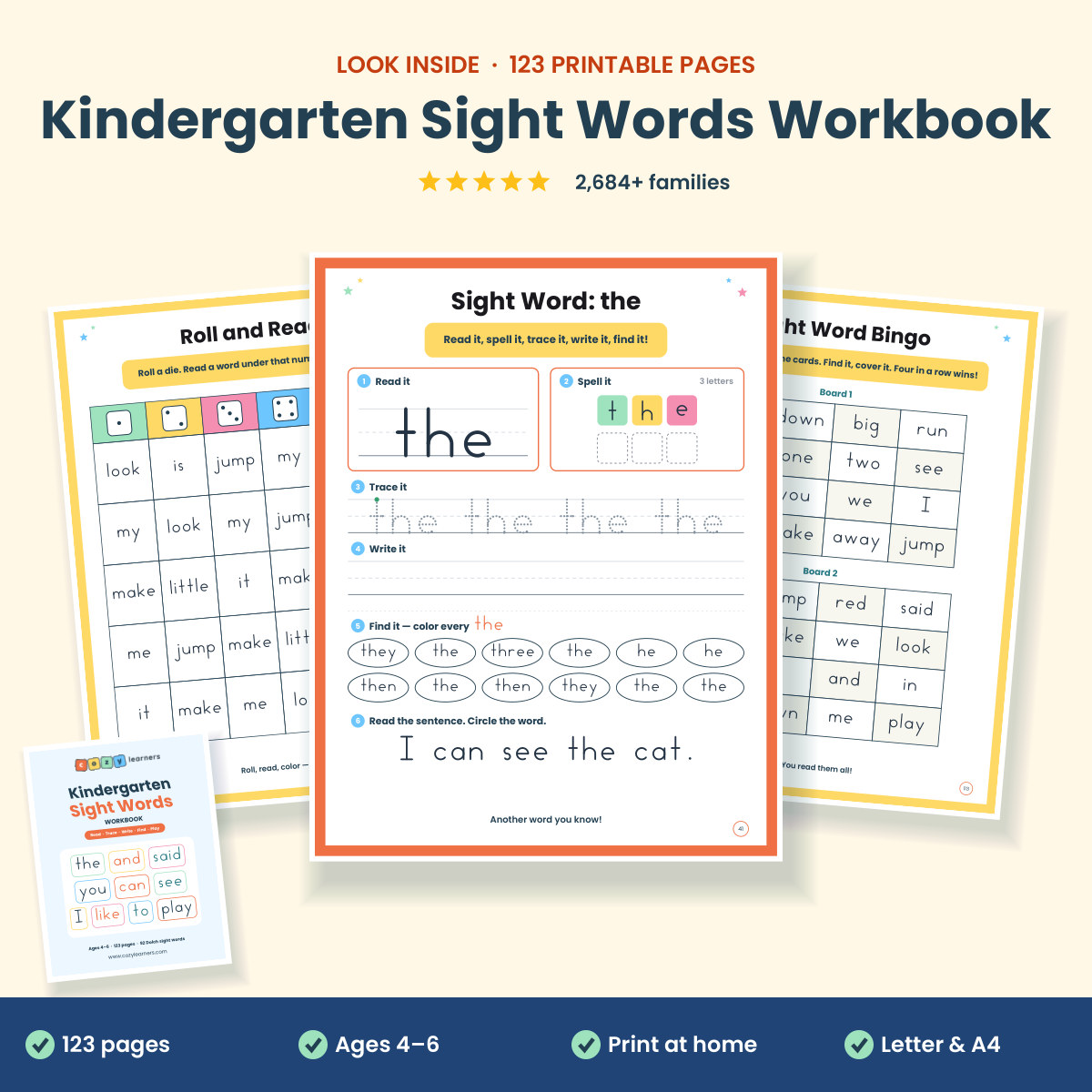
Our Kindergarten Sight Words Workbook covers all 92 Dolch pre-primer and primer words: a page for every word (read it, spell it, trace it, write it, find it among look-alikes, read it in a sentence), a review game every eight words, bingo and 92 flash cards.
Free printable
Sight Word Worksheets
11 kindergarten sight word worksheets from our Sight Words Workbook: ten of the most common words, a page each — read, spell, trace, write and find it — and a word search.