Sight Words for Preschool and Kindergarten: A 48-Word List
The 48 sight words to teach first, where they come from, how many a kindergartener needs, and five quick ways to practice them — with free flash cards to print.
By Cozy Learners · · 5 min read
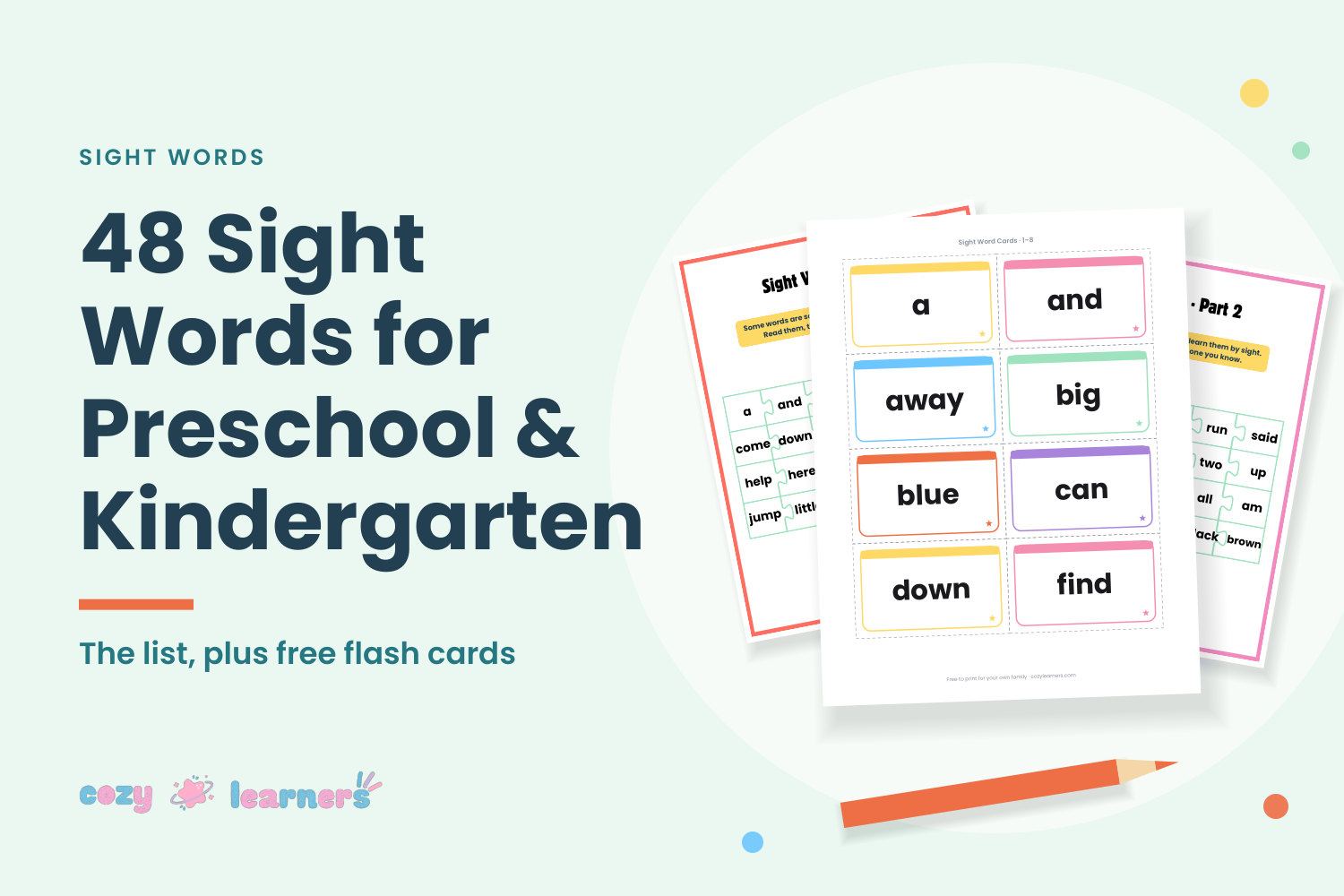
Sight words are the small, very common words a child learns to recognize at a glance: the, and, is, you, said. They show up in almost every sentence a beginning reader meets, so knowing them lets a child read real books much sooner.
This article gives you a list of 48 to start with, explains how many your child really needs, and shares five ways to practice them that take five minutes or less.
What makes a word a "sight word"?
The term is used in two ways, which causes some confusion.
- High-frequency words are simply the most common words in English. The, a, and, to, in make up a surprising share of everything we read.
- "Tricky" words are common words that don't follow the phonics rules a beginner knows yet. Said doesn't sound like s-a-i-d. The doesn't rhyme with he.
Most sight word lists mix both. Many of the words on them — can, it, up, big, red — can be sounded out once a child knows short vowels. That is a good thing: it means phonics and sight words support each other.
The 48-word list
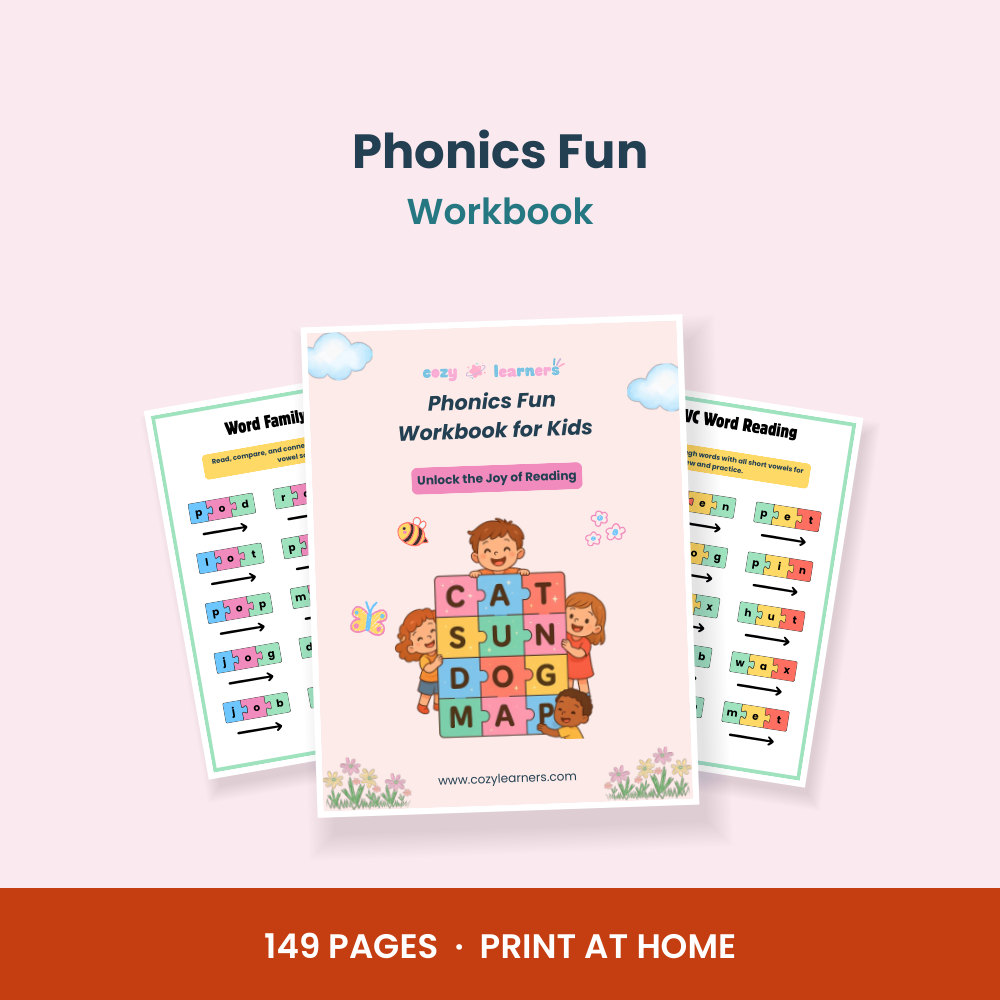
These are the 48 sight words in our Phonics Fun Workbook. The first 40 are the complete Dolch pre-primer list, a set of high-frequency words compiled by the educator Edward Dolch in the 1930s and still widely used in US schools. The last eight start the Dolch primer list.
Dolch pre-primer (40 words)
a · and · away · big · blue · can · come · down · find · for · funny · go · help · here · I · in · is · it · jump · little
look · make · me · my · not · one · play · red · run · said · see · the · three · to · two · up · we · where · yellow · you
From the Dolch primer (8 words)
all · am · are · at · ate · be · black · brown
How many sight words should a child know?
There is no single national standard. As a rough guide:
- Preschool (ages 3–4): none are required. If your child is interested, a handful of words — their name, I, a, the, mom — is plenty.
- Kindergarten: many programs aim for somewhere between 20 and 50 by the end of the year. The 40 Dolch pre-primer words are a common target.
- First grade: children typically add the rest of the primer list and the first-grade list.
More important than the number: your child should be learning sight words alongside phonics, not instead of it. A child who knows 200 sight words but cannot sound out pig will hit a wall. A child who knows 40 sight words and can blend short words is on solid ground.
When to start
A good moment is once your child knows most letter sounds and has started blending simple words. At that point, a few sight words let them read real sentences — I can see the big dog — instead of single words, which is very motivating.
Start with two or three words a week. Add new ones only when the old ones are quick.
Five ways to practice (5 minutes each)
1. Flash and say
Show a card. If your child reads it within about three seconds, it goes in the "know it" pile. If not, say it together, and it goes back in the deck. Keep the deck small: five or six words at a time.
2. Sight word hunt
Pick one word — the — and hunt for it in a picture book. Count how many you find on a page. Children are amazed how often the turns up.
3. Stomp the word
Spread five cards on the floor. Call out a word; your child stomps on it. Good for wiggly days.
4. Build a sentence
Use cards to build short sentences together: I — see — a — red — car. Add a picture card or a drawing for the nouns. Then mix them up and let your child rebuild.
5. Write it three ways
Write the word in crayon, then in a different color, then with a finger in a tray of salt or flour. Writing helps a word stick, and the salt tray makes it feel like a game.
Common mistakes
- Too many words at once. Ten new words a week is too many for most kindergarteners. Two or three is better.
- Only drilling. Flash cards are useful, but a word is truly learned when your child reads it in a sentence or a book.
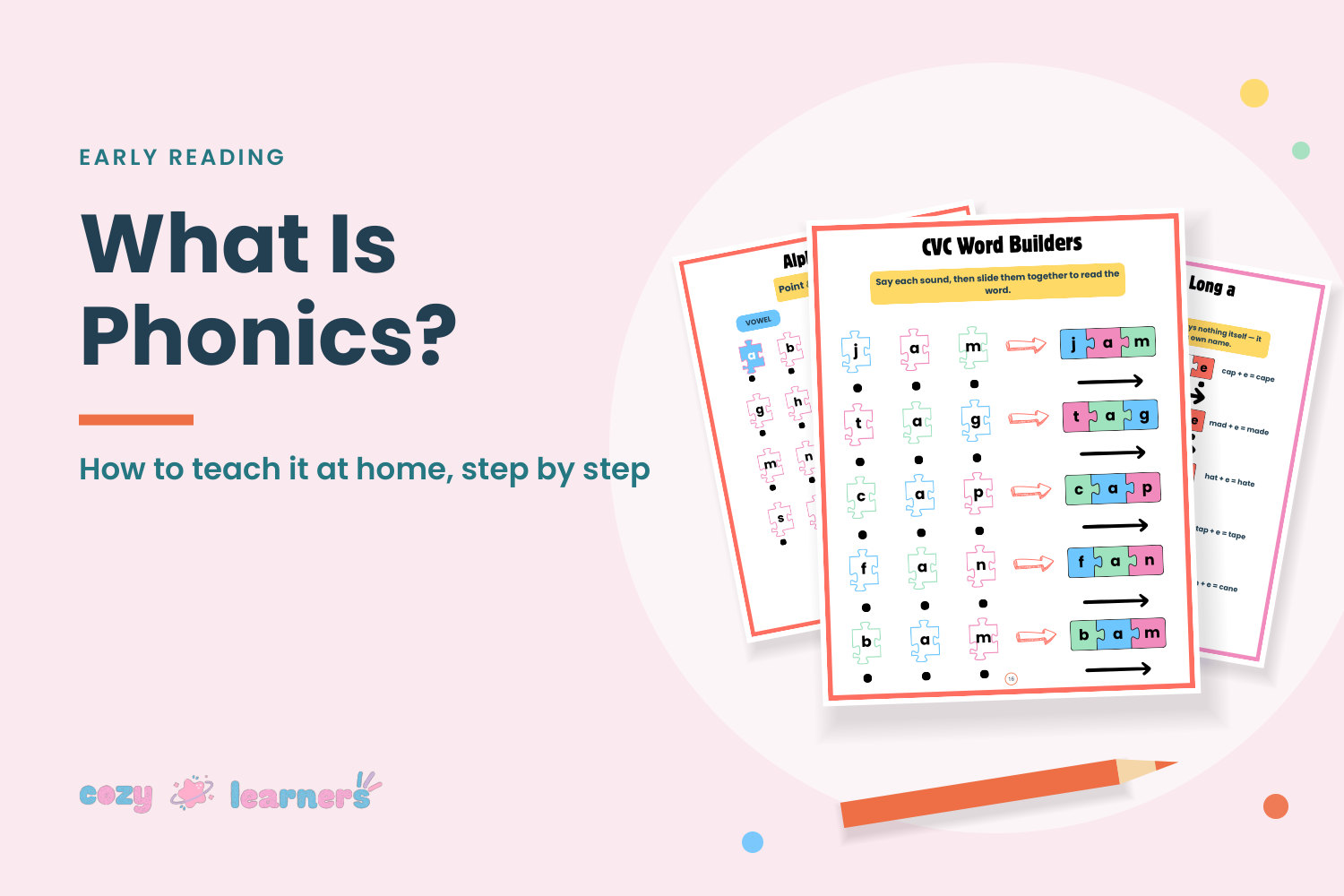
- Skipping phonics. Sight words are a supplement. Letter sounds and blending are the main road. Our guide What Is Phonics? explains the order.
- Treating every sight word as unreadable. If a word like can or red can be sounded out, show your child how. It teaches them that the rules work.
Free flash cards
Our free 48 Sight Word Flash Cards have all the words above, ready to print and cut, with three quick games to play with them. Print them on cardstock if you have it, and keep a small stack by the kitchen table.
When your child can read all 48, they are ready for sentences — and their first story. That is exactly where the Phonics Fun Workbook takes them next.