Homeschool Preschool: What Your 3- or 4-Year-Old Really Needs
Preschool at home is mostly play, books and talk — with ten or fifteen minutes of something more structured. Here is what to teach, what to skip, and how a day can look.
By Cozy Learners · · 5 min read
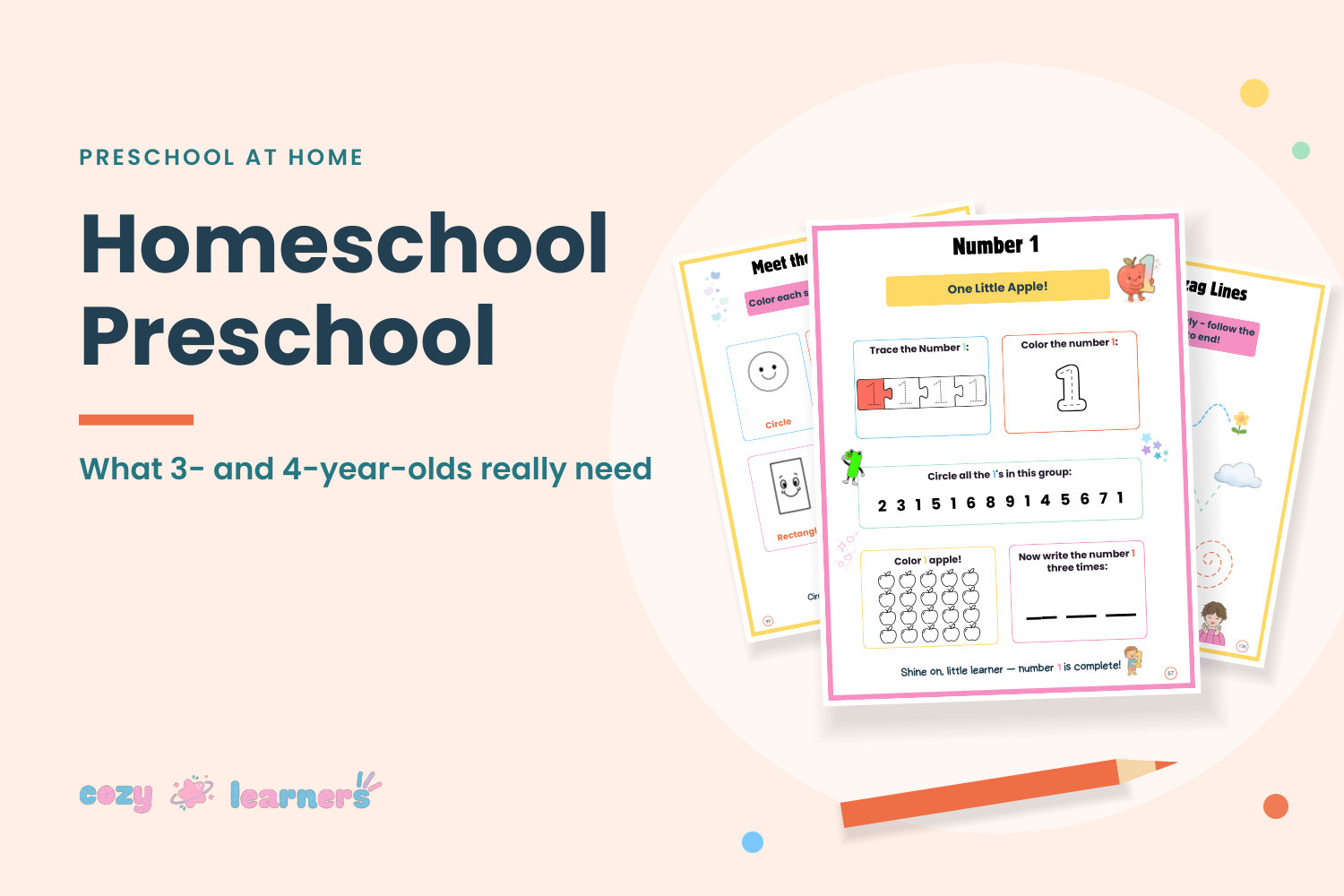
If you are thinking about preschool at home, here is the good news first: you are probably already doing most of it. Reading picture books, counting stairs, talking about the weather, letting your child help in the kitchen — that is the core of a good preschool.
What a homeschool preschool adds is a little intention: a short daily routine, a few skills to work on, and a way to notice progress. This guide covers what a 3- or 4-year-old actually needs, and what they do not.
How much structure at this age?
Very little. Young children learn mostly through play, talk, and doing real things with a grown-up. A formal "school time" is optional at three and short at four.
A useful rule of thumb:
- Age 3: 5 to 10 minutes of a sit-down activity, when your child is interested. Many days, none at all.
- Age 4: 10 to 20 minutes, once a day, broken into two or three pieces.
The rest is play. That is not a compromise — it is the curriculum. Building with blocks is spatial reasoning. Pretend play is language. Pouring water between cups is early measuring.
The six areas worth working on
You do not need a list of 200 objectives. These six areas cover what matters most before kindergarten:
1. Talking and listening
The single best predictor of early reading is a rich spoken vocabulary. Read aloud every day, ask open questions ("What do you think happens next?"), and let your child tell you long, rambling stories.
2. Letters and sounds
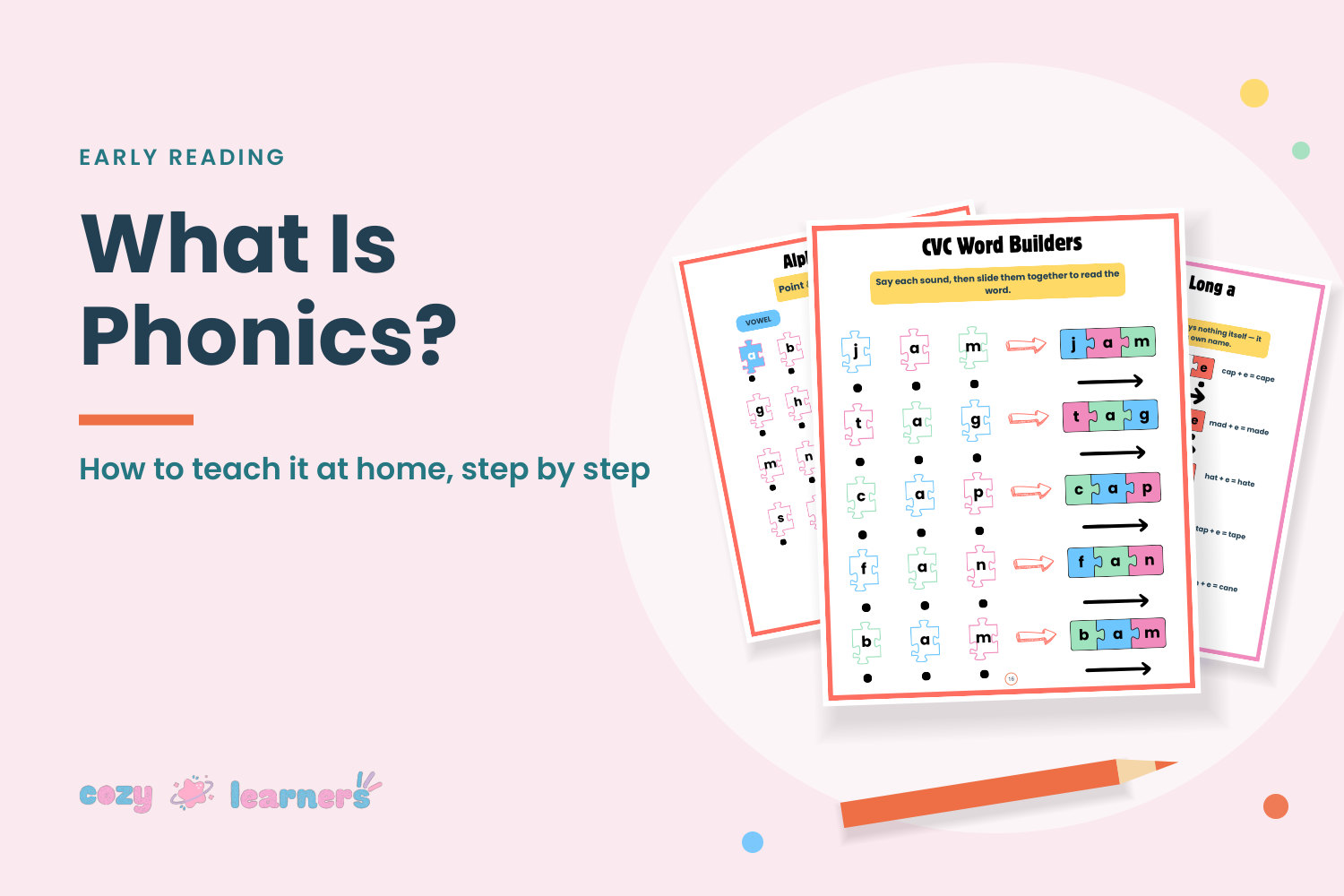
At three, singing the alphabet and spotting the first letter of their name is plenty. At four, start pairing letters with their sounds: b says /b/ as in ball. Focus on sounds more than letter names — sounds are what children use to read. Our article on letter recognition activities has a dozen ideas.
3. Numbers and counting
Count everything: stairs, grapes, cars. The goal is not counting high, it is counting objects one by one, touching each as you say the number. By four, many children can count 10 objects and recognize the numbers 1 to 5.
4. Fine motor skills
Before a child can write, their hands need strength and control. Playdough, tearing paper, stringing beads, peeling stickers, and using child-safe scissors all build it. Tracing lines and simple shapes comes next.
5. Thinking and logic
Sorting by color, shape or size; finishing simple puzzles; spotting what is the same and what is different; continuing a pattern like red-blue-red-blue. These are the roots of math and reading both.
6. Feelings and independence
Taking turns, naming feelings, asking for help, putting on shoes, washing hands, tidying up. Kindergarten teachers often say these matter more on day one than knowing the alphabet.
A sample preschool morning
Here is one way a four-year-old's morning might go. None of it needs to happen at a table.
| Time | Activity |
|---|---|
| After breakfast | Read two picture books together on the couch |
| 10 minutes | One printable page: trace a letter, color the pictures that start with its sound |
| Snack | Count the crackers, then eat three and count again |
| Playtime | Blocks, dolls, outdoor play |
| 10 minutes | A hands-on activity: cutting strips, a puzzle, sorting buttons by color |
| Afternoon | Help with a chore — matching socks is sorting practice |
That is a full preschool day.
Do you need a preschool curriculum?
Not strictly. Plenty of families do preschool with library books and household objects. A curriculum helps in three situations:
- You want a sequence. Instead of wondering what to do next, you open the next page.
- You are teaching more than one child. A plan keeps the younger one moving while you work with the older.
- You want to know nothing is missing before kindergarten starts.
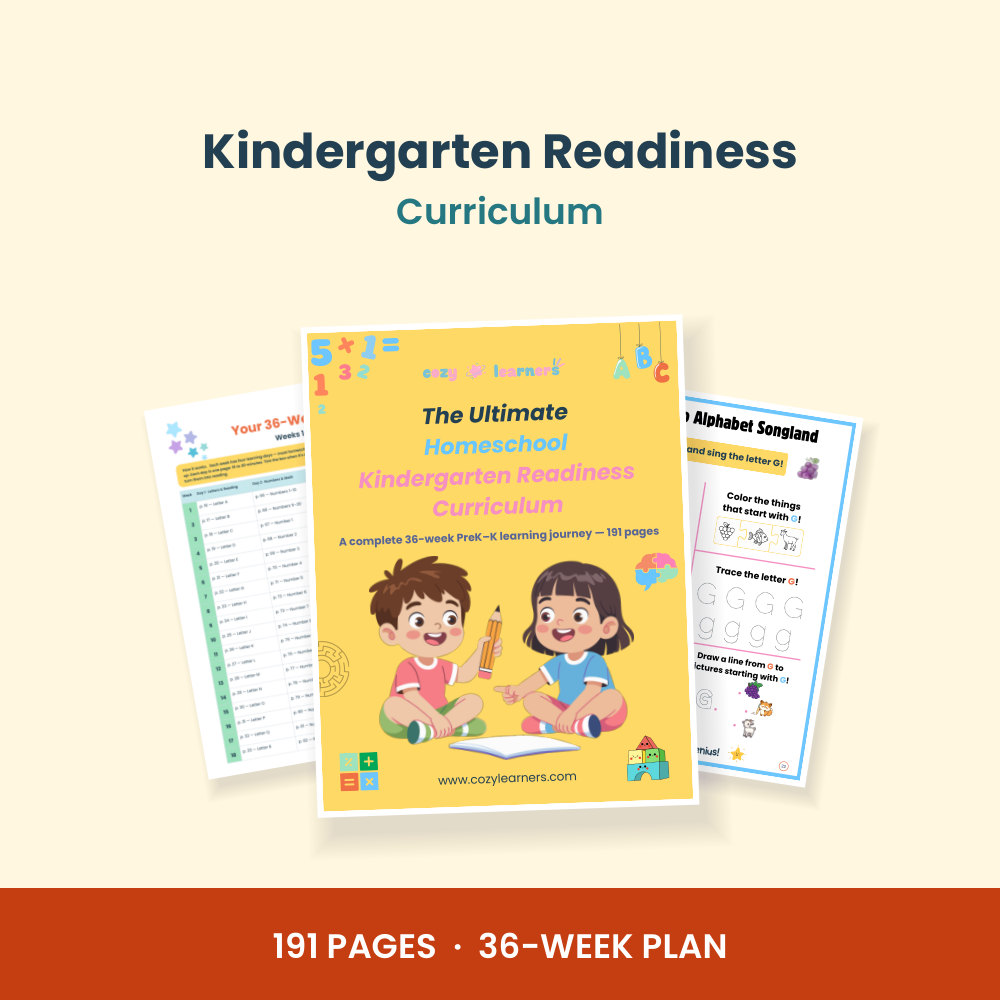
If you choose one, look for short activities, no prep, and a range that starts where your child is. Our Kindergarten Readiness Curriculum covers ages 3 to 6 across eight learning areas, with a 36-week plan at one page a day — a pace that suits a four-year-old well, and that a three-year-old can follow at half speed.
What you can skip
- Pushing early reading. Some four-year-olds start to read on their own; most do not, and that is fine. Strong letter sounds and lots of read-alouds are the right foundation.
- Long worksheet sessions. If your child is wiggling after five minutes, the page is done for today.
- Expensive supplies. Crayons, paper, safe scissors, glue, playdough and a library card cover nearly everything.
- Comparing. Three- and four-year-olds develop in bursts. A child who cannot cut in September may cut beautifully in January.
How do you know it is working?
Look back every month or two rather than every day. Can they do something now that they could not do before? Do they enjoy book time? Are they asking questions?
For a more complete picture, our free Kindergarten Readiness Checklist lists 30 skills across six areas, from knowing letter sounds to putting on a coat. Tick what your child can do today, and you will see where to focus next — and how much they already know.