"Kindergarten Reading Worksheets: What to Practice, in What Order (Free Printables)"
Which kindergarten reading worksheets help, and in what order — letter sounds, rhyming, blending CVC words, sight words, then simple sentences — with tips to keep practice short and free printable reading pages.
By Cozy Learners · · 3 min read
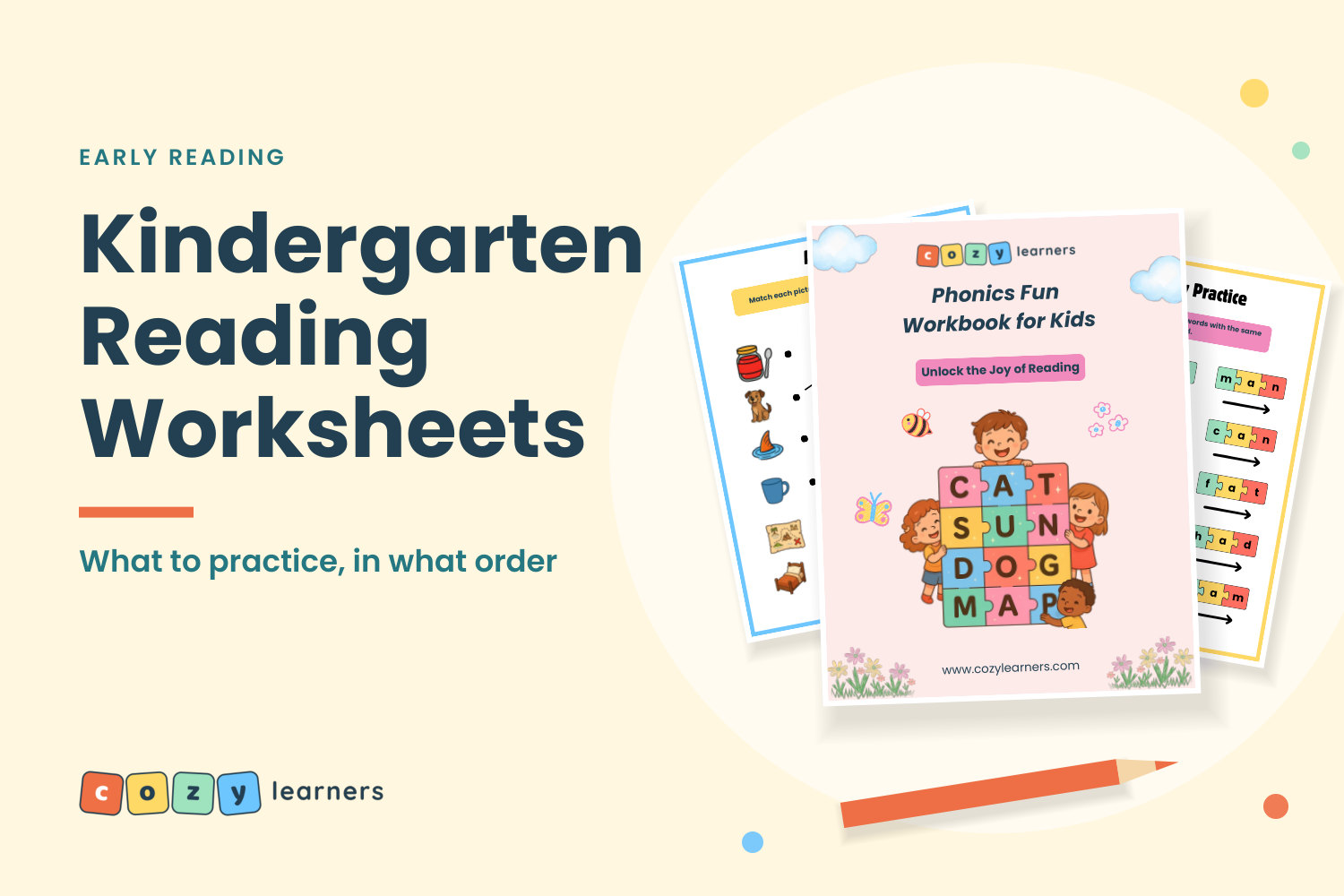
Reading worksheets can help a kindergartner — or bore them silly. The difference is mostly order: a page that asks a child to read sentences before they can blend c-a-t is frustrating, and a page of letter sounds for a child who already reads is a waste of a morning.
Here is what kindergarten reading worksheets should practice, in the order children usually learn it, and how to use them so they actually help.
Step 1 — Letter sounds
Before reading, a child needs to know that letters make sounds: m says /m/, s says /s/. Good worksheets at this stage ask your child to find the letter, say its sound, and match it to a picture that starts with it (m — moon).
Teach the sounds first and the names alongside them. A child who knows the alphabet song but not the sounds is not ready to read yet. Our letter recognition activities have fifteen ideas without paper.
Step 2 — Hearing sounds in words
This is done mostly out loud: rhyming (cat, hat, bat), clapping syllables, hearing the first sound of a word. It is called phonemic awareness, and it is the bridge between knowing letters and reading. See our 12 phonemic awareness activities — no printing needed.
Step 3 — Blending CVC words
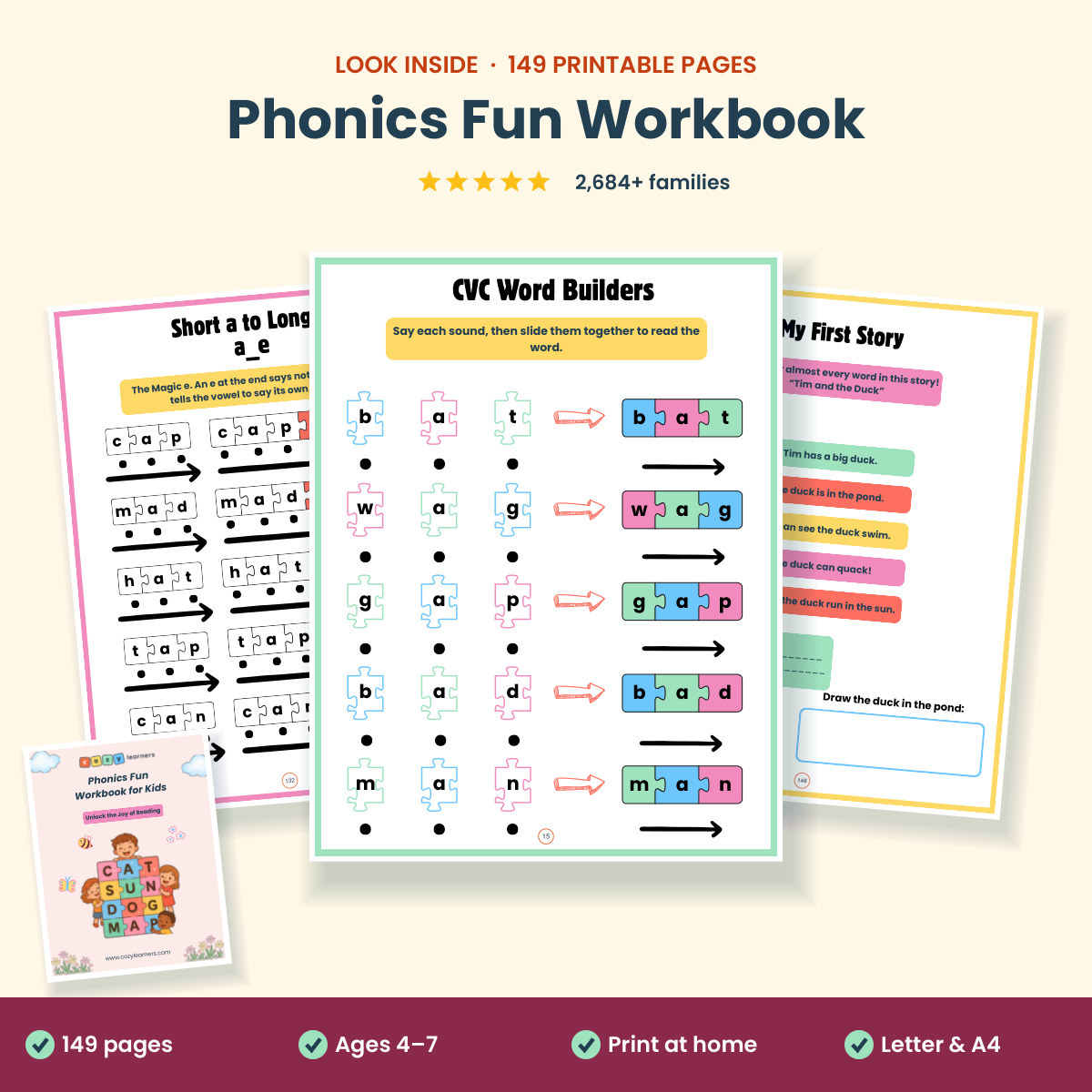
CVC words are three-letter words a child can sound out: consonant, vowel, consonant — c-a-t, cat. This is the moment a child starts to really read. Good CVC worksheets let your child build words sound by sound, read word families (hat, mat, sat), and match words to pictures.
Start with one short vowel — usually a — and add the others one at a time. Our CVC words list has 150+ words by vowel, and our free CVC words worksheets cover all five short vowels.
Step 4 — Sight words
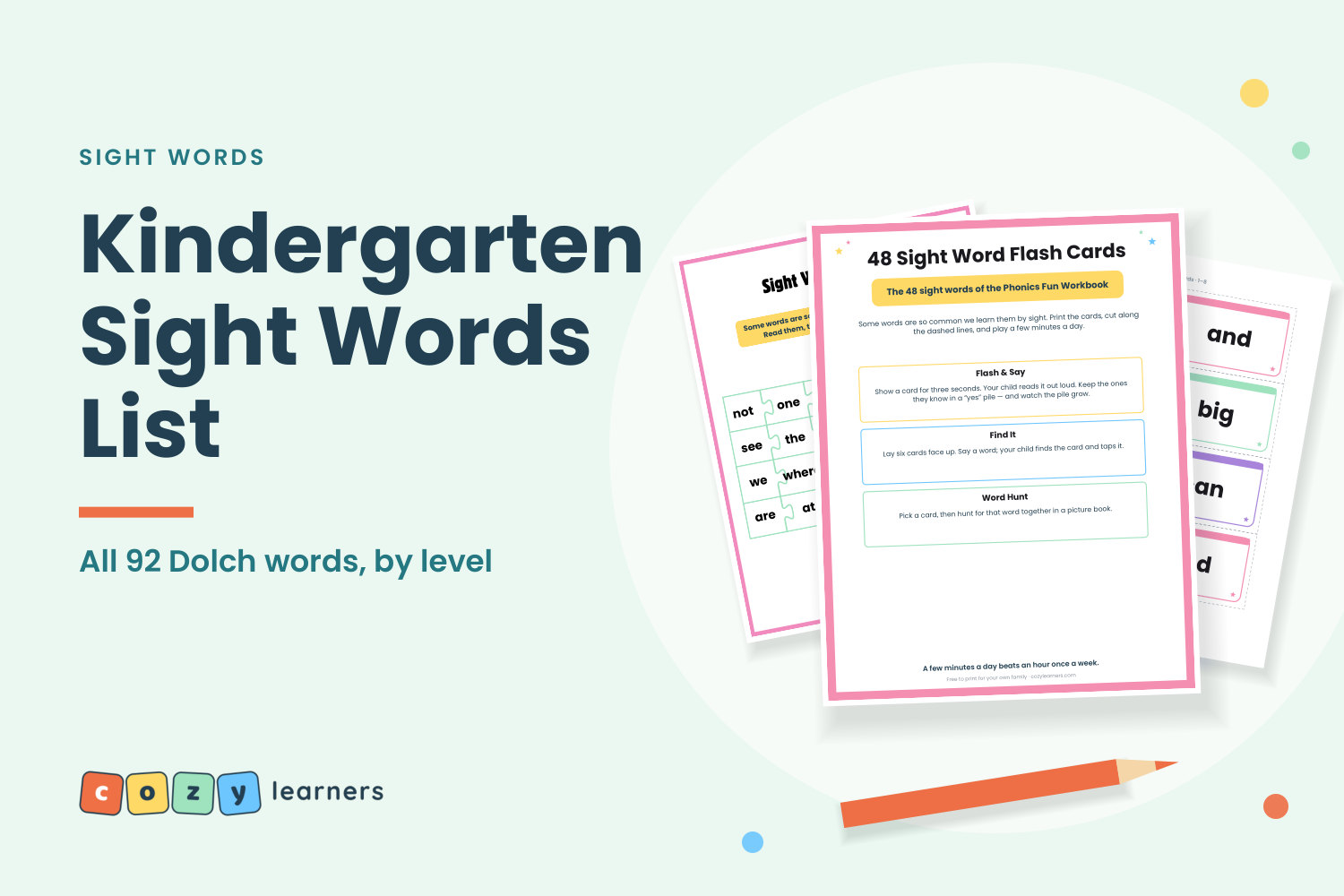
Some very common words don't follow the rules — the, said, was, you — and are learned by sight. Two or three new words a week is plenty. The kindergarten sight words list has all 92, and our free sight word worksheets practice ten of the most common.
Step 5 — Simple sentences and first stories
Once your child can blend CVC words and knows a handful of sight words, they can read sentences like The cat can sit. Worksheets at this stage: read a sentence and match it to a picture, fill in a missing word, put words in order. Then — the best moment of the year — a first little story they can read alone.
How to use reading worksheets well
- One page a day is plenty. Five to ten minutes, sitting next to your child.
- Say it out loud. Reading worksheets are for talking through, not for silent work.
- Go back if it's hard. If a page frustrates your child, drop back one step for a week.
- Read real books every day. Worksheets practice the skill; books are why it matters.
- Praise the effort, especially the sounding out. Slow blending is how fast reading begins.
Free kindergarten reading printables
- CVC words worksheets — 12 pages, all five short vowels.
- Sight word worksheets — ten words, a page each.
- 48 sight word flash cards — to print and cut.
The whole path, in one book
Our Phonics Fun Workbook follows exactly this order over 149 pages: letter sounds, CVC words and word families, then digraphs, the magic e, bossy R and sight words — up to a first story a child can decode alone.
Free printable
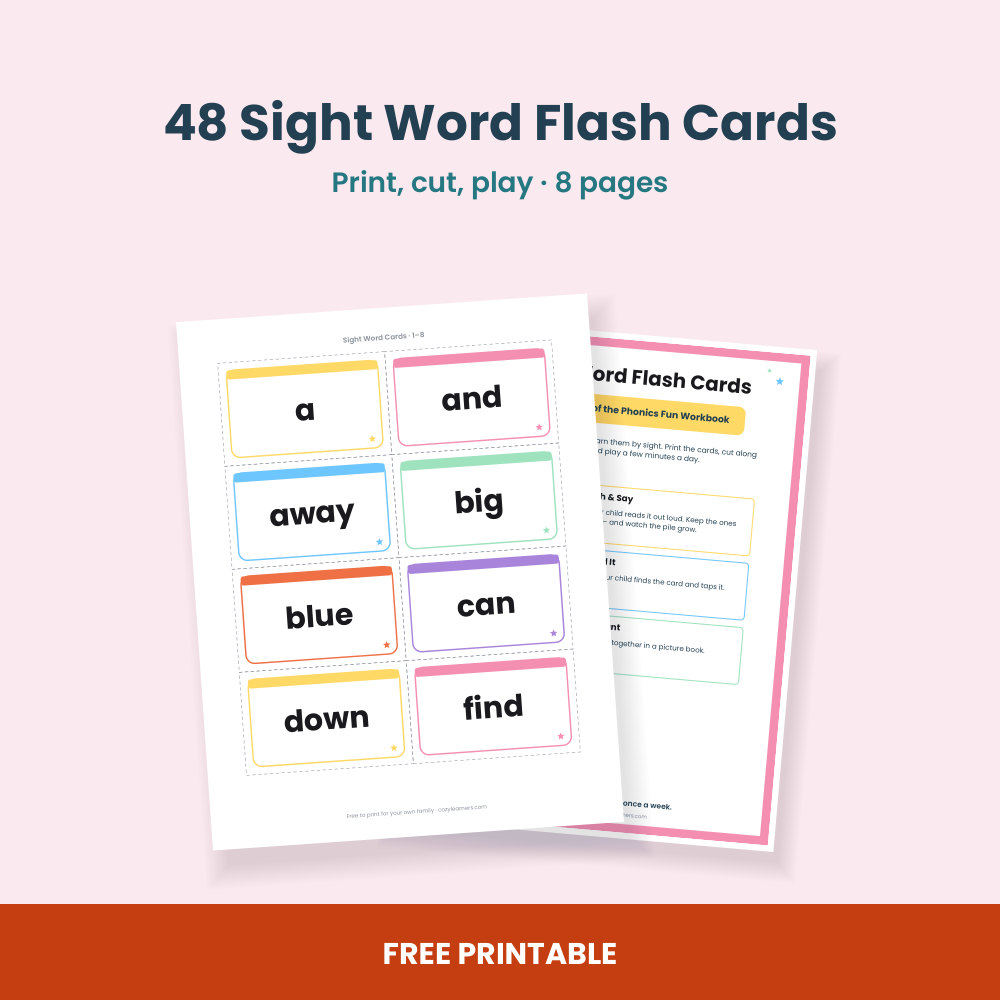
48 Sight Word Flash Cards
The 48 sight words of the Phonics Fun Workbook, as cards to print and cut — with three quick games to play with them.